


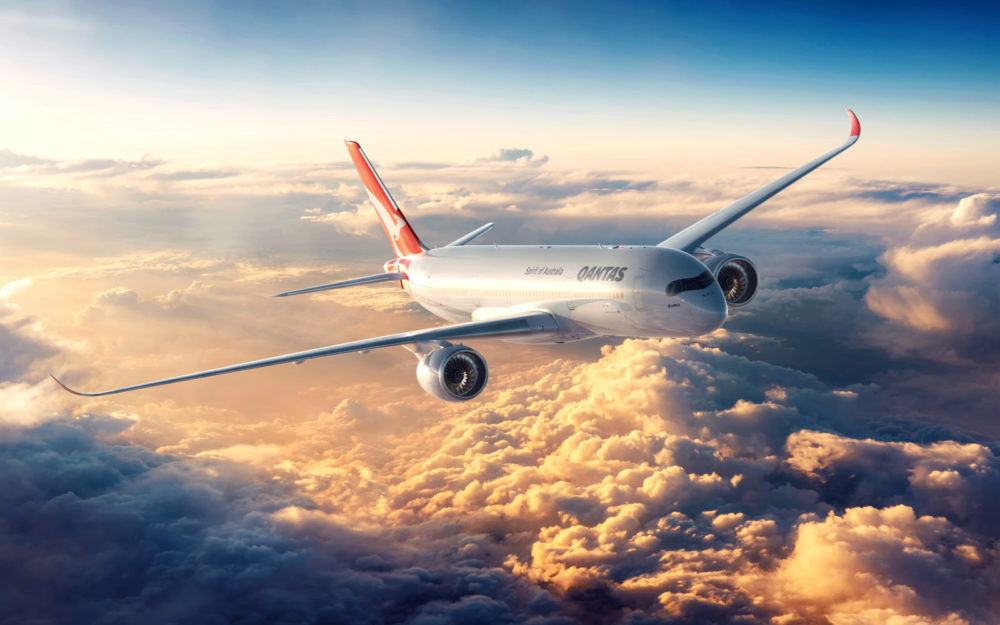

During the IATA Annual General Meeting in Seoul, Airbus noted the A350-900 and A350-1000 are both suitable for Qantas’ Project Sunrise.
In an effort to fly between Sydney and and Europe non-stop, Qantas has been evaluating the Airbus A350 and Boeing 777-8 and has now proposed August to announce their decision.
Christian Scherer, Airbus’ Chief Commercial Officer, presented plenty of enthusiasm about Airbus’ position in the competition.
With the Boeing 777-8 just a revised frame – a “re-engined hummer” in Scherer’s words – Airbus is the only player with a completely new aircraft with plenty of design potential down the line.
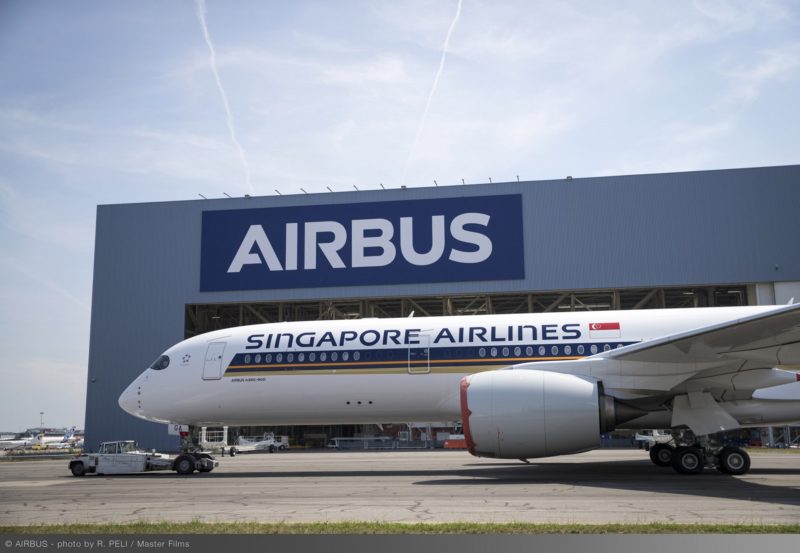
Rather than offering the standard A350-900 and A350-1000, Airbus is proposing an Ultra Long Range (ULR) variant of both to Qantas, which the airline has positively responded to.
The following table presents some key specifications of the contending aircraft. Note the asterisks – they’re referenced at the end of this article for clarity.
| Aircraft | MTOW (t)** | Range (km) | Engines |
| Airbus A350-1000* | 316*** | 15,557 | Trent XWB-97 |
| Airbus A350-900ULR | 280 | 18,000 | Trent XWB-84 |
| Boeing 777-8 | 351.5 | 16,090 | GE9X-105B |
Qantas’ CEO, Alan Joyce, has held thorough meetings with both manufacturers and now issuing a call for the best and final offers according to Flight Global.
A decision is expected to be made in August, with the winning manufacturer unveiling their product. Delivery is scheduled to take place in late 2022 with flights from Sydney and Melbourne launching in 2023.
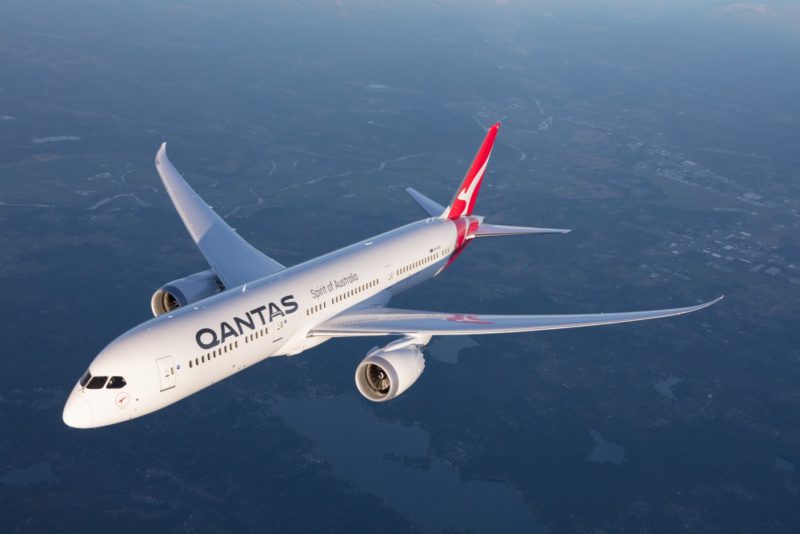
Joyce also has London, Paris and Frankfurt in mind as well as Chicago in the United States, however planning is ongoing and is subject to approval.
Unfortunately for curious passengers and aviation enthusiasts, Qantas has elected to drop the idea of below deck modules for bedding, gyms and office spaces because of the weight involved.
@Airbus and @SAFRAN lower deck modules on display at #AirbusID. A350 is fully supportive, A330 just needs an air supply adaptation. Can be installed or removed during stop overs – loaded like cargo containers – plug based for electrical. pic.twitter.com/Xj86vXberE
— Inflight Aviation News (@news_inflight) May 21, 2019
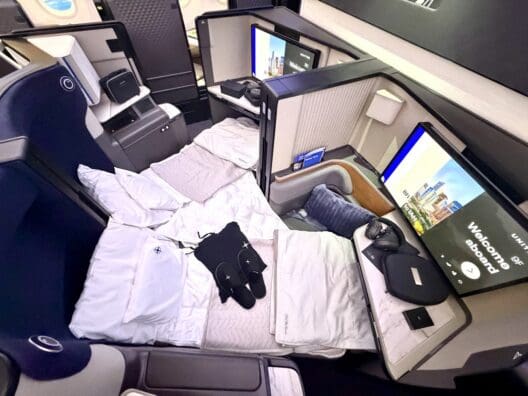
Instead, Qantas will be offering an upgraded cabin product as well as an area for economy and premium economy passengers to stand up, stretch and hydrate.
Both aircraft are unable to carry cargo on the flights and have never been capable of reaching Joyce’s dream capacity requirements, however he remains confident the airline can pull it off.
All that’s needed now is for operating crew to agree on the conditions of the flight and undergo the required preparation work.
What aircraft do you see Qantas choosing?
*A350-1000 range – potential ULR range unknown
**Maximum Takeoff Weight
***MTOW increase to 319t being studied for ULR
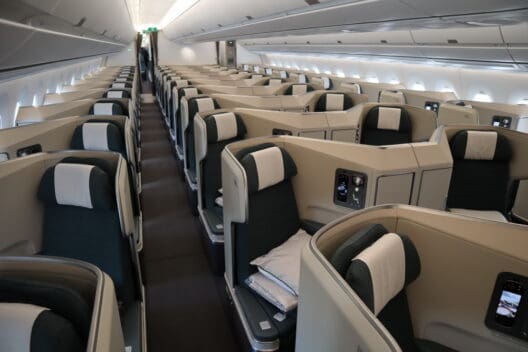




Qantas has recently said all passengers must remain on the main deck and it will provide some exercise space down the back.
Due to adverse winds and extra distance for safest path aircraft need 20,000 km range @ 900kmh – over 22 hrs flying.
Qantas has said it wants 300 passengers. We are likely to see them in 4 classes due high value passengers for Sydney/Melbourne to London and New York. We should expect first class suites and lay-flay business class seats in the first third of the aircraft. We should expect premium economy in the middle third, and economy with extended legroom in the final third.
Given the above, an A350-1000ULR would only carry 265 passengers, combined with measures such as an MTOW increase to 322 tonnes, a fuel increase from 127.7 tonnes to 146 tonnes, and an OEW saving of 10 tonnes from 159 tonnes to 149 tonnes, and a 9 sq.m increase in wing area.
A Boeing 777-9 has the range but could only carry 120 passengers to carry sufficient fuel. It could carry 303 passengers in 4 classes with exercise space on the main deck if it can take 17.4 tonne out of the 181.4 tonne OEW.