



I fly from Nairobi to Juba in the cockpit of Kenya Airways Boeing 737-800, arriving in South Sudan, the world’s youngest and poorest country. Without aviation, the country simply stops.
I follow the Kenya Airways Boeing 737-800 pilots in the cockpit on a short but high-workload flight into one of Africa’s most challenging aviation environments. Upon arrival, I’m surprised to find Juba Airport packed with fascinating aircraft.
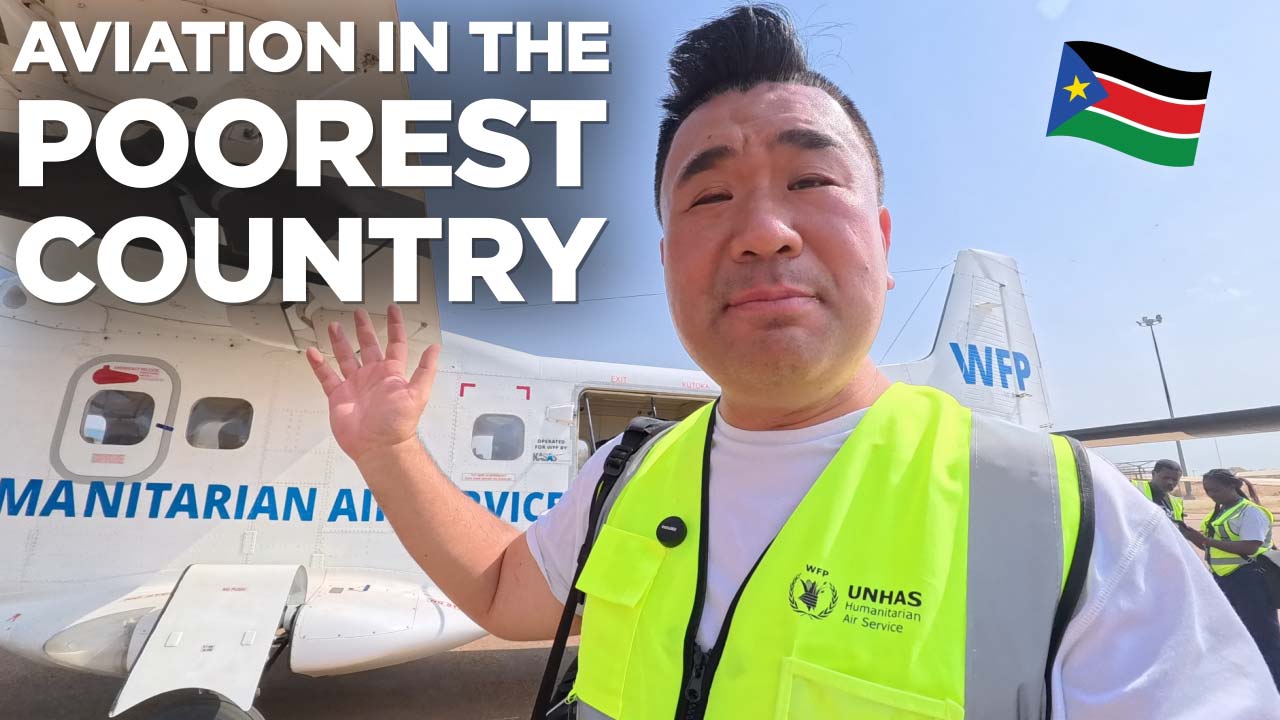
My host for this journey is the United Nations World Food Programme (WFP). While Juba appears calm on the surface, the security situation remains complex, and photography is heavily restricted. With the support of the UN and the country’s media department, I was granted special permission to document aviation operations on the ground.
The next morning, my aviation adventure truly begins. Aircraft of all types line up at Juba Airport, ready to depart. I soon learn why — South Sudan is the single largest operating theatre of UNHAS, the world’s largest humanitarian air service run by the UN World Food Programme.
✈️ Why is aviation in South Sudan so unique?
- The country has only about 200 km of paved roads
- During the rainy season, many roads become completely impassable
- Aviation doesn’t complement transport here — it replaces roads
- Humanitarian flights far outnumber commercial services
In short: Without aviation, South Sudan stops. Here, flying is not a luxury — it is essential for survival and development. But aviation in South Sudan also faces serious challenges. I encounter evidence of past aircraft accidents, abandoned airplanes on airfields, and learn that airspace above 24,000 feet is uncontrolled — adding further complexity to operations.