




On February 28, 2026, global airlines suspended operations across the Middle East after the United States and Israel launched coordinated strikes on multiple cities in Iran, triggering retaliatory missile attacks and widespread airspace closures.
As many as eight states declared full or partial airspace closures: Iran, Israel, Iraq, Jordan, Qatar, Bahrain, Kuwait, and the United Arab Emirates. Syria also closed part of its southern airspace for 12 hours along its border with Israel.
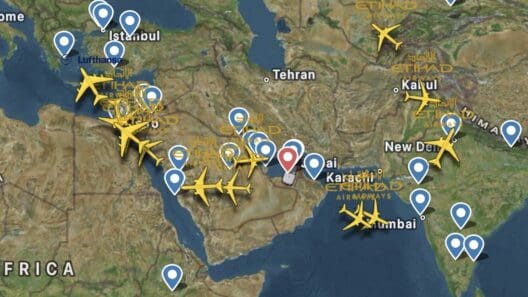
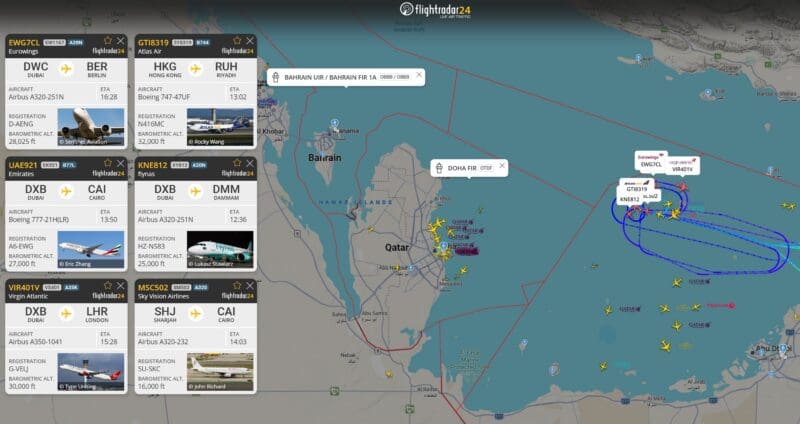
According to Flightradar24, airspace over Iran, Iraq, Kuwait, Israel, and Bahrain was virtually empty on Saturday morning. Aircraft were observed holding or rerouting around closed flight information regions (FIRs), with traffic shifting toward Saudi Arabia, Egypt, and Turkey.
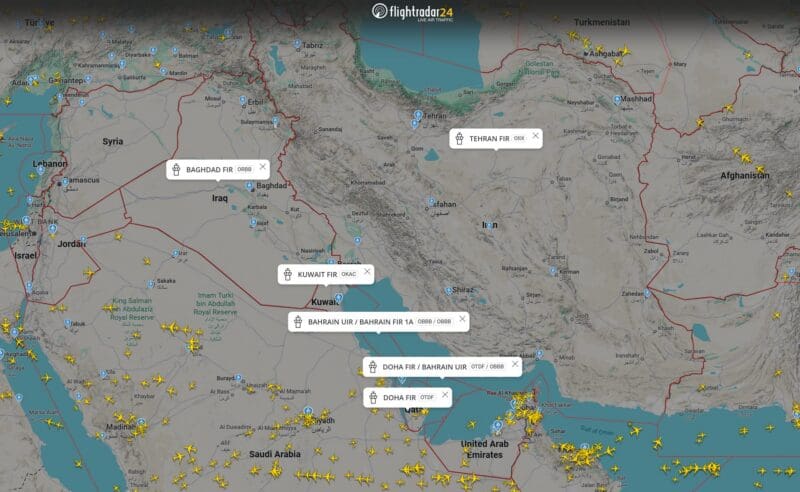
The European Union Aviation Safety Agency (EASA) recommended that European airlines avoid the affected airspace following the military escalation.
The UAE confirmed it had “temporarily and partially” closed its airspace as a precaution. Qatar, Bahrain, and Iraq implemented full closures. The shutdown of Qatari airspace effectively halted operations at Hamad International Airport, one of the region’s primary long-haul transit hubs.
Widespread Flight Diversions
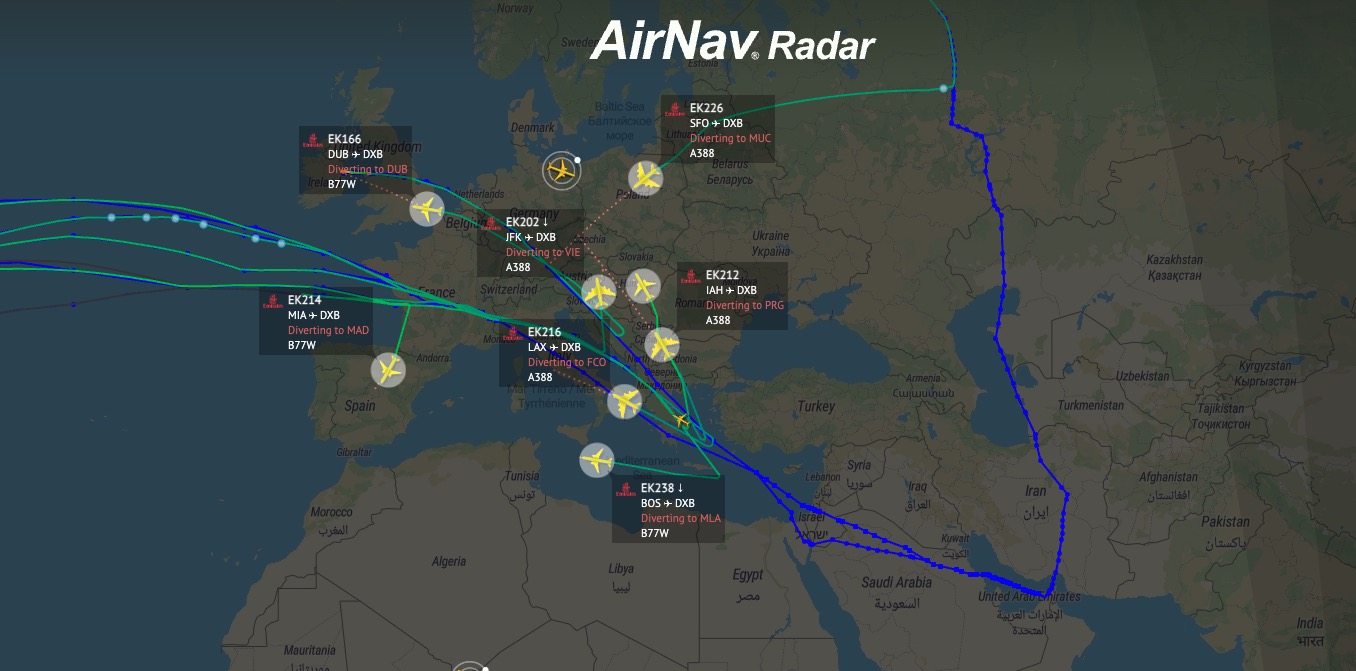
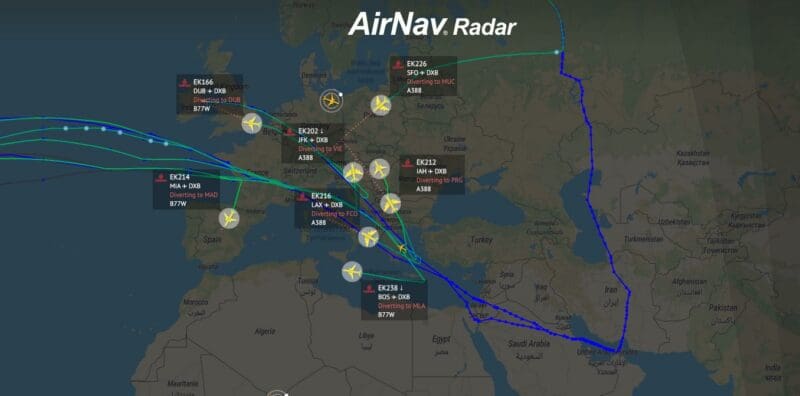
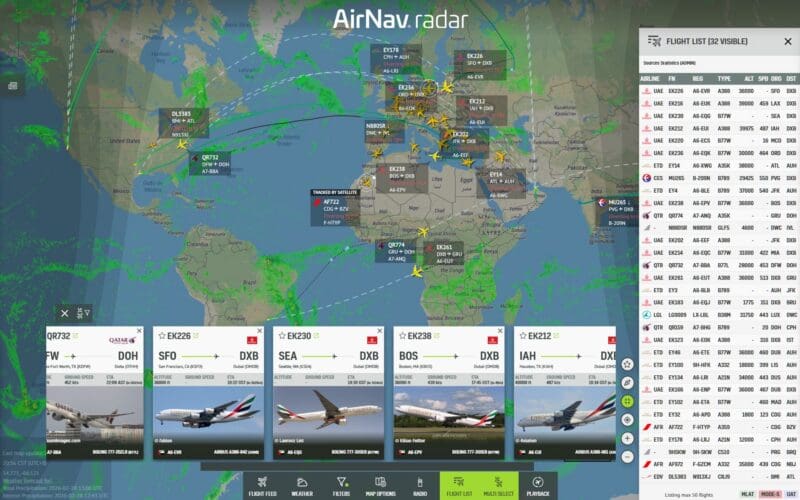
As conflict zones expand, airlines are being forced to divert to numerous airports and take extreme detours.
Some of the diverted Emirates flights (from the U.S.) include:
- EK216 from Los Angeles diverted to Rome
- EK226 from San Francisco diverted to Munich
- EK230 from Seattle diverted to Hamburg
- EK202 from New York diverted to Vienna
- EK236 from Chicago diverted to Budapest
- EK212 from Houston diverted to Prague
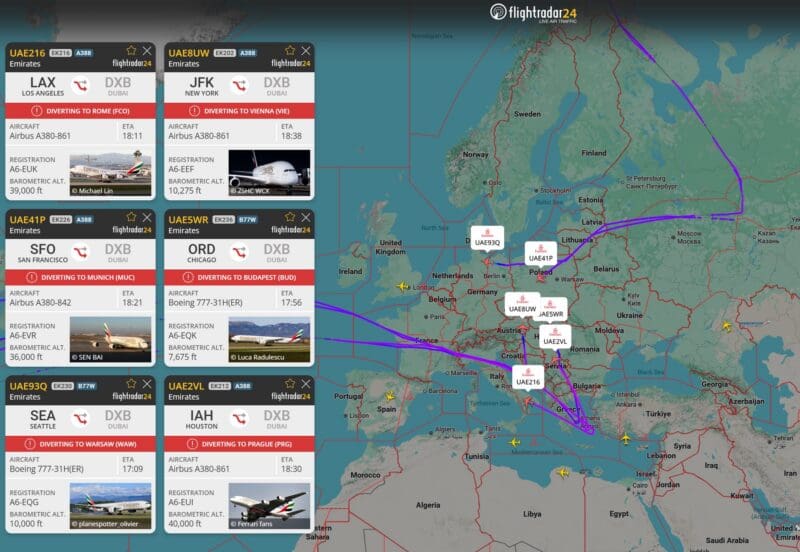
Besides the above-mentioned long-haul flights, several flights to and from European destinations have been diverted, among others.
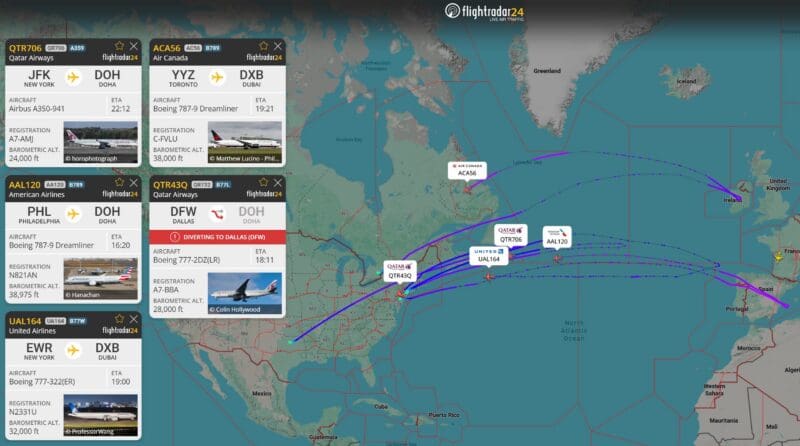
Numerous other flights returned to their origin, including:
- QR989 from Melbourne returned to Melbourne
- QR732 from Dallas returned to Dallas
- QR706 from New York returned to New York
- UA164 from Newark to Dubai, returned to Newark
- AC56 from Toronto to Dubai, returned to Toronto
- AA120 from Philadelphia to Doha, returned to Philadelphia
- EY2 from New York to Abu Dhabi diverted to Muscat
- EY14 from Atlanta to Abu Dhabi diverted to Istanbul
Moreover, several flights from the Asia-Pacific region to the Middle East diverted to nearby airports.
Drone Attack at Kuwait Airport
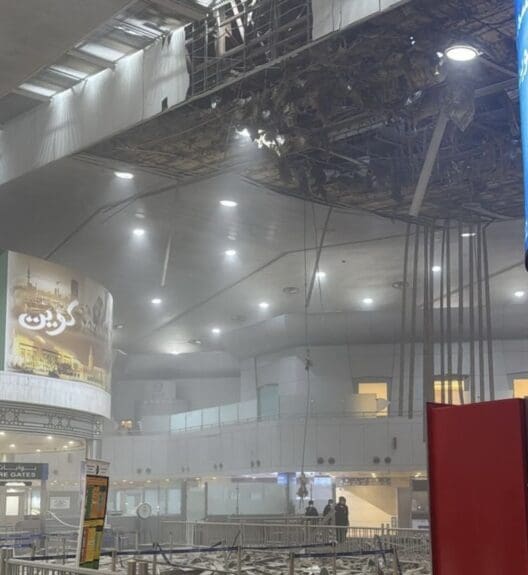
A drone struck the passenger terminal building at Kuwait International Airport (T1) on 28 February 2026, according to the General Authority of Civil Aviation in Kuwait.
The impact caused minor material damage to the terminal and a few workers sustained minor injuries. Authorities activated emergency procedures and secured the site.
Impact on Major Global Airlines
Airlines across Europe, Asia, and the Middle East announced cancellations, diversions, and airspace avoidance measures.
- Qatar Airways: Suspended all flights to and from Doha due to the closure of Qatari airspace. The carrier stated it would resume operations once restrictions are lifted and expects continued disruption even after reopening. Additional ground staff are being deployed at Hamad International Airport to manage passenger rebooking.
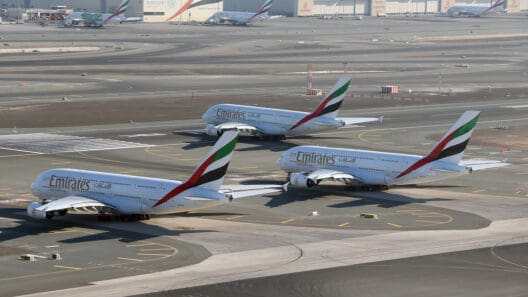
- Emirates: Suspended operations to and from Dubai following the UAE’s airspace restrictions.
- Air India: The Indian flag carrier announced the suspension of all flights to the Middle East and said it would temporarily avoid the region entirely.
- Lufthansa Group: Suspended flights to Tel Aviv, Beirut, and Oman until March 7 and cancelled Dubai services on Saturday and Sunday. The group confirmed it would avoid Israeli, Lebanese, Jordanian, Iraqi, and Iranian airspace until at least March 7.
- Air France: Cancelled flights to Tel Aviv and Beirut on Saturday, while KLM brought forward the suspension of its Amsterdam–Tel Aviv service, cancelling Saturday’s flight instead of waiting until Sunday as previously planned.
- British Airways: Canceled flights to Tel Aviv and Bahrain until March 3, as well as its Amman service on Saturday.
- Wizz Air: Halted flights to Israel, Dubai, Abu Dhabi, and Amman until March 7.
- Turkish Airlines: Cancelled flights to Qatar, Kuwait, Bahrain, the UAE, and Oman on Saturday, and suspended services to Lebanon, Syria, Iraq, Iran, and Jordan until March 2.
- Virgin Atlantic: Announced that it would avoid Iraqi airspace and cancelled its VS400 London Heathrow–Dubai service on Saturday.
- Japan Airlines: Cancelled its Tokyo Haneda–Doha flight on Saturday and the March 1 return sector.
- LOT Polish Airlines: Diverted flight LO121 from Warsaw to Dubai back to Warsaw.
- Scandinavian Airlines: Suspended its Copenhagen–Tel Aviv flight on Saturday, with later decisions pending.
- Norwegian Air: Suspended all Dubai services until March 4.
- ITA Airways: Suspended flights to and from Tel Aviv and confirmed it would avoid Israeli, Lebanese, Jordanian, Iraqi, and Iranian airspace until March 7. Dubai services were suspended until March 1.
- Aegean Airlines: Suspended flights to Tel Aviv, Beirut, and Erbil until March 2.
- Iberia Express: Cancelled its Saturday Tel Aviv service.
- IndiGo: Cancelled flights to and from the Middle East on Saturday.
- Russian authorities confirmed that Russian carriers suspended flights to Iran and Israel.
Broader Operational, Network Implications
The Middle East functions as a primary corridor for traffic between Europe and Asia, particularly since Russian and Ukrainian airspace closures following the war in Ukraine. Additional closures across the Gulf significantly limit routing options for long-haul flights.
With Iran, Iraq, Qatar, Bahrain, the UAE, Kuwait, Israel, and Jordan restricting or closing airspace, airlines face longer routings, increased fuel burn, crew duty challenges, and potential aircraft rotation disruption.
Carriers operating Europe–Asia, Europe–Australia, and transcontinental Asia–North America services via Gulf hubs are expected to face knock-on effects beyond the region.
Several airlines stated that schedules remain under continuous review and further adjustments are likely depending on security assessments and the duration of the airspace closures.
At the time of publication, multiple Gulf FIRs remained closed, and the situation continued to evolve.
Sources: FlightRadar24, Radar Box, Reuters