
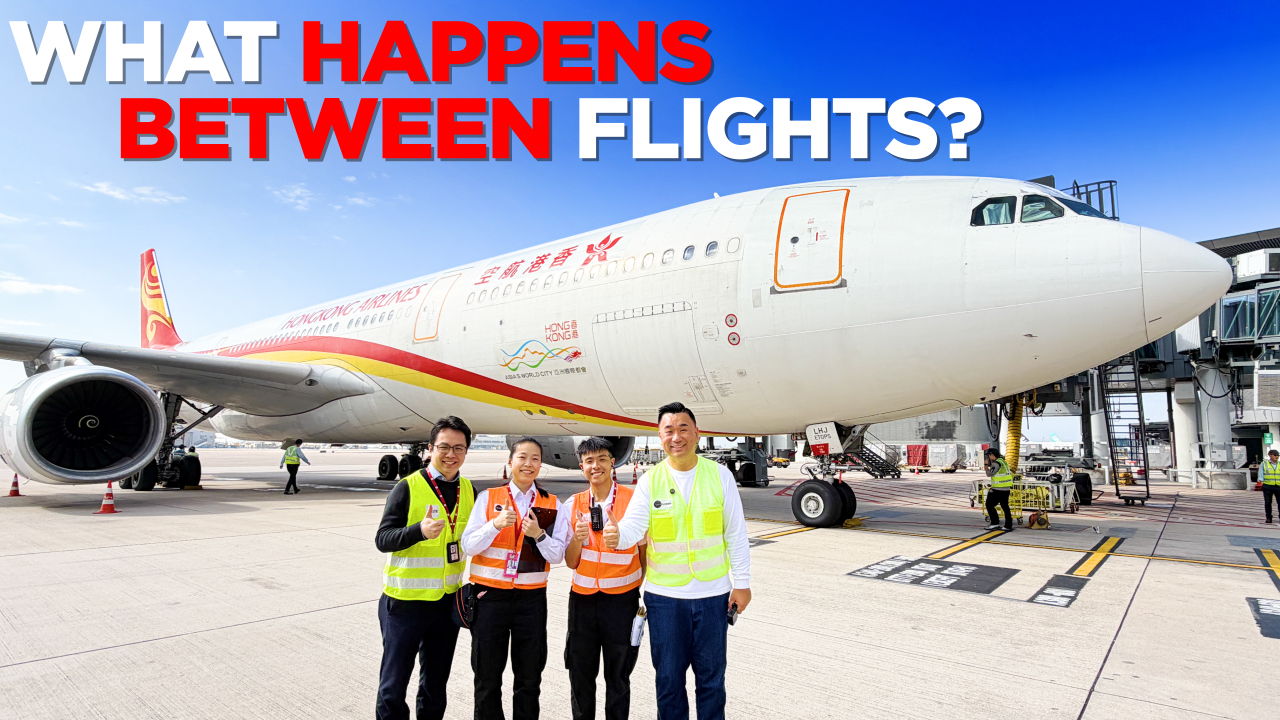

What really happens between flights? Follow an aircraft turnaround coordinator in Hong Kong and step into the time-critical operation.
Starting from the ground handler SATS HK office, coordinator Vinkie picks up her next assignment. A Hong Kong Airlines A330 is arriving shortly from Bali — and within just 90 minutes, it must be ready to depart again for the Maldives.
I follow her to the gate and onto the jet bridge, preparing for the aircraft’s arrival. The moment the A330 comes to a stop on chocks, the clock starts ticking. Ground teams move in instantly — communication cables connected, ground power and water hooked up, and the passenger boarding bridge aligned. As passengers begin to disembark, engineers are already at work, carrying out critical walk-around inspections of the engines, tyres, and wings.
I met Ben, a line maintenance engineer, and followed his routine as he checked the aircraft’s technical log, inspected the cabin and cockpit, and resolved any defects to ensure the aircraft was safe for its next journey.
Ground service duties can generally be separated into 2 categories: Above the wing: teams manage passengers, boarding, cockpit, and cabin preparation. Below the wing: baggage is unloaded and reloaded, cargo is handled, the aircraft is serviced, and refueling is performed.
Behind every on-time departure is a carefully orchestrated effort involving engineers, ramp agents, cleaners, caterers, and operations staff — all working seamlessly under pressure. It’s a fast-paced environment where precision, teamwork, and timing are everything.