





Icelandair in talks with Airbus and Boeing for 757 replacement
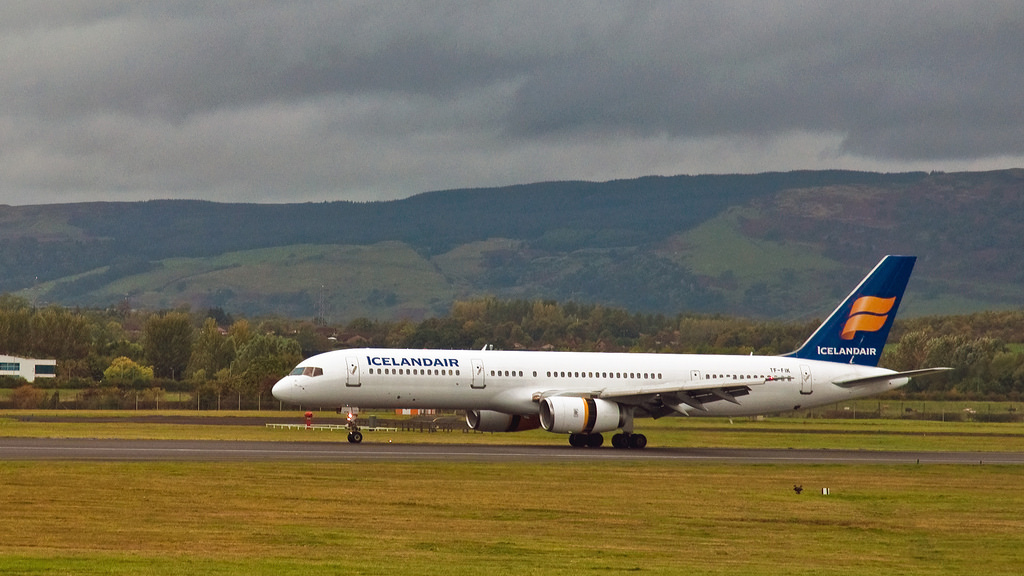
According to a local Icelandic newspaper, Icelandair is reportedly in talks with Airbus and Boeing for an aircraft that can replace their ageing fleet of 757s.
The airline has sent both manufacturers a letter requesting formal negotiations leading to a potential order for aircraft that could replace their fleet of Boeing 757s over the next few years.
Icelandair is already in the process of receiving new Boeing 737 MAX aircraft, consisting of both MAX 8 and the larger MAX 9 variants set to seat 153 to 172 passengers respective of the variant size. Nine MAX 8s and seven MAX 9s are to be delivered between 2018 and 2021.
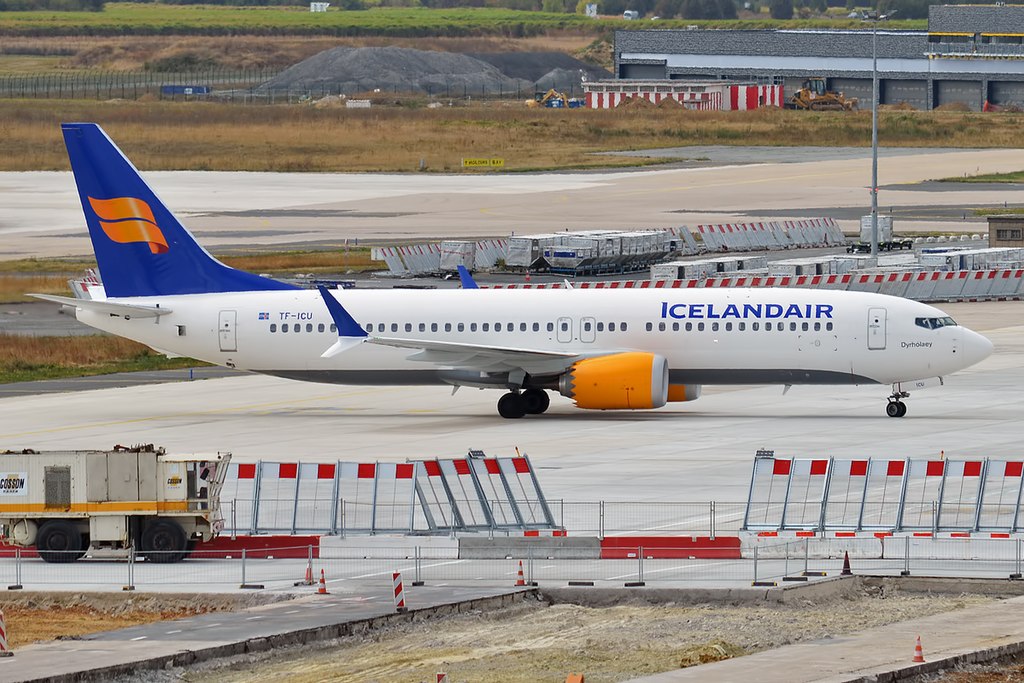
Despite the excellent operating performance the Boeing 737 MAX has been offering to the airline, it’s become clear that a larger aircraft with slightly more range would be needed for some routes. Boeing has no real replacement for the 757, which ended production in 2004, however is studying a new aircraft dubbed the ‘797’ or ‘NMA’ by various aviation communities and figures.
For Airbus, the likely pitch is the A321LR which they love to advertise as the perfect Boeing 757 replacement. Anything larger is unlikely as the airline previously cancelled their order for three Boeing 787 Dreamliners in 2011.
As the talks progress and more information is disclosed, this post will be updated or replaced with an announcement.






Icelandair’s current fleet is comprised of Boeing 757 and 767 aircraft, with a couple of 737MAX8s on the side.
There are four factors to consider with this order:
1) How quickly does FI need the planes.
2) The missions to be flown by the new aircraft.
3) Cost of operation (efficiency)
4) Cost of acquisition (capital risk).
Let’s take the second point first: The 737MAX8 (B8M) can fly missions up to six hours in the existing Icelandair network. This means that all of Europe plus the NE coast of the US can be operated by the B8M. The 763s that FI has can operate up to a ten hour mission in its current configuration. So KEF-West Coast USA can be flown by a 767 year round. In the SEA-KEF market, there are two 757s back to back that fly to KEF. This is owing to the fact that they need their 763s on higher density routes (LHR/CDG/AMS-KEF) and SFO-KEF, which can’t be operated by a 757.
So this leaves routes in the SE USA, DEN/ORD/YVR/PDX as the routes most in need of a 757 replacement.
Now that we have covered that, let’s address point 1: How quickly does FI need the aircraft. FI is currently taking B8Ms and once those aircraft are in place, they can pull the 757s that are at the end of their useful life and part them out for the rest of their fleet. This buys Icelandair one thing: TIME. In other words, FI would need to be able to have the last of their 757s out of their fleet within, say, five years.
Given that the bulk of the routes can be covered by the B8M and the 763 now, there is not a pressing urgent need for aircraft. This does not work in Airbus’s favor, since the big draw to the A321LR is the fact that airlines can get them quickly. Boeing’s NMA won’t be flying before 2025 at the earliest.
Now let’s the last two points together: Cost of acquisition vs. Cost of operation. Right now, FI has pretty low acquisition costs but rather high operating costs because of the age of the fleet. The idea is to lower both by running as efficient an operation as you can while keeping acquisition costs as low as possible. Easy to say. VERY hard to do.
Icelandair is not an airline that is big enough to support a two manufacturer fleet. They have been very successful at building their route net around the 757, then augmenting it with the 763 for growth into longer haul markets and in places where the traffic density is such that a 260 seat aircraft is needed.
If FI were to go with the 321LR, it would have to place a very large order (which they could probably get cheap), but the operating costs go up because of pilot training…and training a pilot to go from a Boeing to an Airbus is not an easy exercise. Then they have to maintain the reserves on both fleets, so again, operating costs will be substantially higher. The only viable route for Airbus is to replace the entire Boeing fleet with the 321LR and 332neos. The operational transition costs are too staggering to contemplate.
The other factor is Boeing will not go down without a fight, and they already have the MAX8 on the FI property. Boeing is in a good position to offer FI a total fleet replacement option that does not require significant pilot retraining.
So, out comes my crystal ball:
FI places an order for the MAX8/9 and possibly 10 (not sure if the 10 has the payload range). They can get these planes quickly (in the next 3 years based on the way Boeing is pumping them out of the factory) and draw down the older 757s on European routes, save the newer 757s for the missions it requires until the Boeing NMA is announced (to replace the 763s) and then transition out of the 757/767 completely by 2025-2026.
Remember, FI is like Southwest…their success is predicated on maximizing a single fleet type. It has been only the past four years that FI has gone in the direction of the 767-300ER, because of its payload range, to allow FI to grow deeper into the US market.
They will stay a Boeing customer.
Tough situation.
737MAX + A321neo?
737MAX only?
A321neo only?
737MAX + 787-8?
All not ideal choices. Possibly A321neo for now as a tie over until the 797 or keep the A321neo’s for 2-3 decades.