


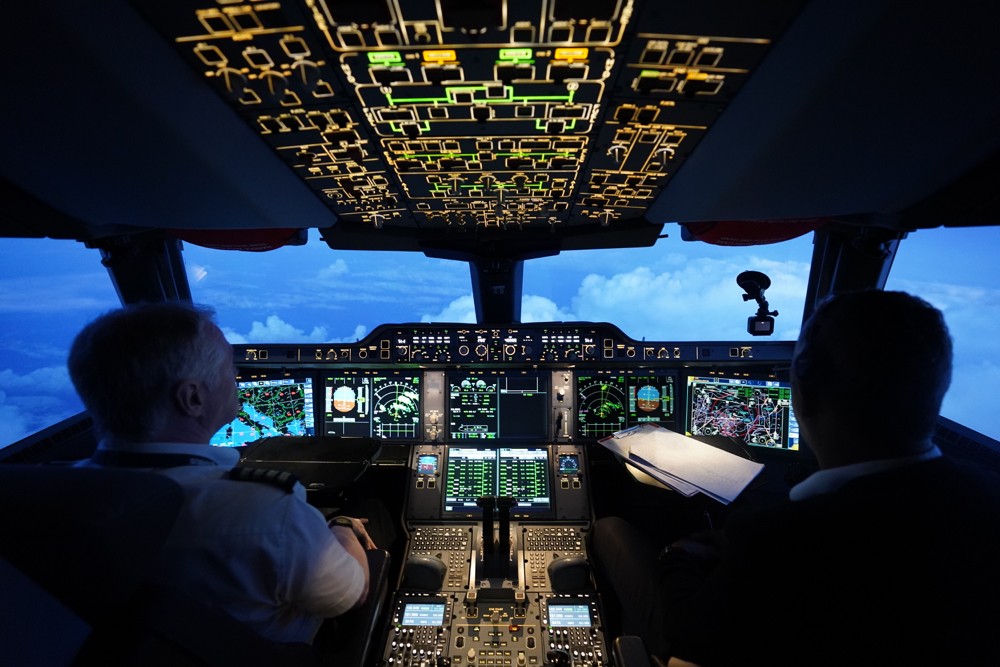

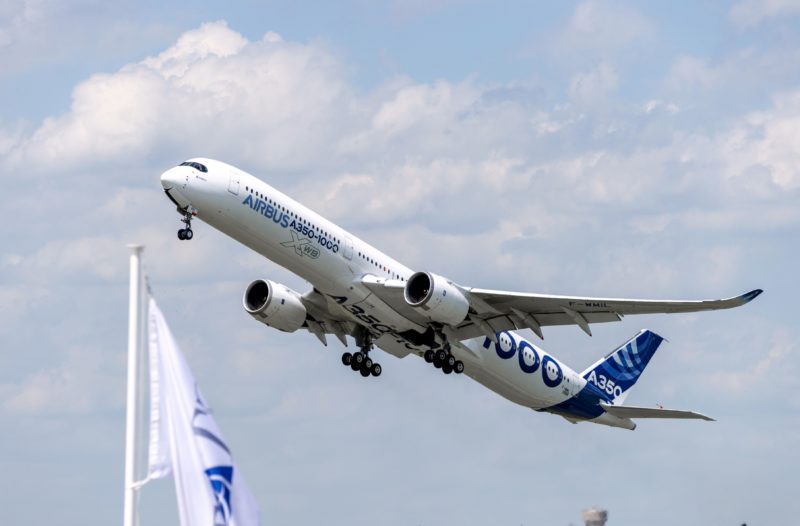
5th February 2020, the European Union Aviation Safety Agency (EASA) published an Emergency Airworthiness Directive (AD) on all Airbus A350-900 and -1000 aircraft. The effective date is 7th February.
Details are as below:
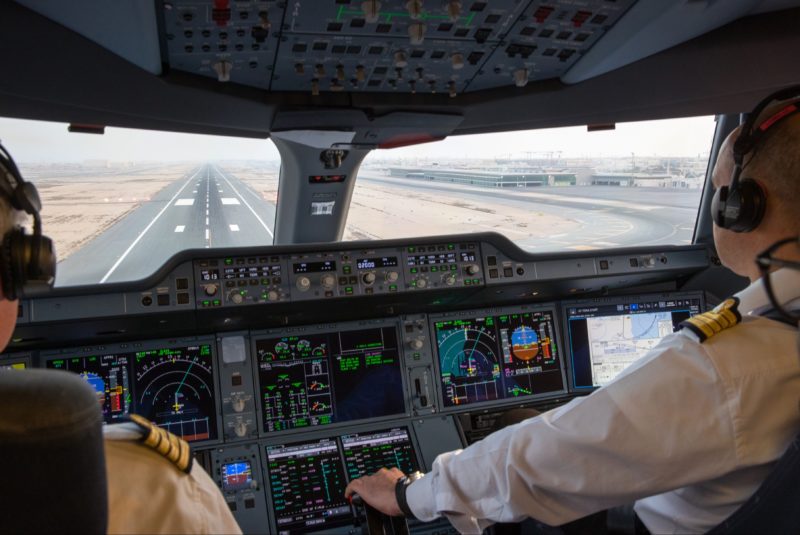
As we have reported, two in-service occurrences were reported involving inadvertent liquid spillage; on the ENG START panel or ECAM Control Panel (ECP) on the centre pedestal in the flight deck on A350 airplanes. In both cases, the airplane experienced an un-commanded engine in-flight shut-down (IFSD) of an engine, some time after the liquid spillage. Subsequent engine relight attempts were not successful.
In both events, the flight crew performed a diversion and landed the airplane safely.
Results of the preliminary technical investigations indicate abnormal operation of the components of the ENG START panel or ECP, due to liquid spillage in the system.
This condition, if not corrected, could lead to a dual engine IFSD, possibly resulting in a forced landing with consequent damage to the airplane and injury to occupants.
To address these occurrences, Airbus published the Airbus A350 Airplane Flight Manual (AFM) Temporary Revision (TR) 123 Issue 1; defining a liquid prohibited zone in the cockpit and the procedures to be followed, in the case of inadvertent liquid spillage on the centre pedestal. Airbus also published the Flight Operators Transmission (FOT) 999.0006/20; reminding operators about the standard practices for handling liquids in the cockpit, to reduce the probability of hazards.
For the reasons described above, this AD requires amendment of the AFM.
Read about the two engine in-flight shut-downs:



Exactly.
I was cabin crew with BA for 42 years and retired for 7 .
As far back as I remember, we always passed any drinks in open containers on the window side of the cockpit.
Dear Sam:
This is an old issue as old in aviation! As a standard cockpit crew practice: No coffee as it is usually the case; no coffee or any liquid drink is passed to the crew from the area of center pedestal location in any aircraft.
All drinks are passed to captain and first officer from either side close to the cockpit side window and the paper cup is not filled to the rim.
Above practice was in place since decades.
Now a days young generation needs to be re-educated 9f this practice.