



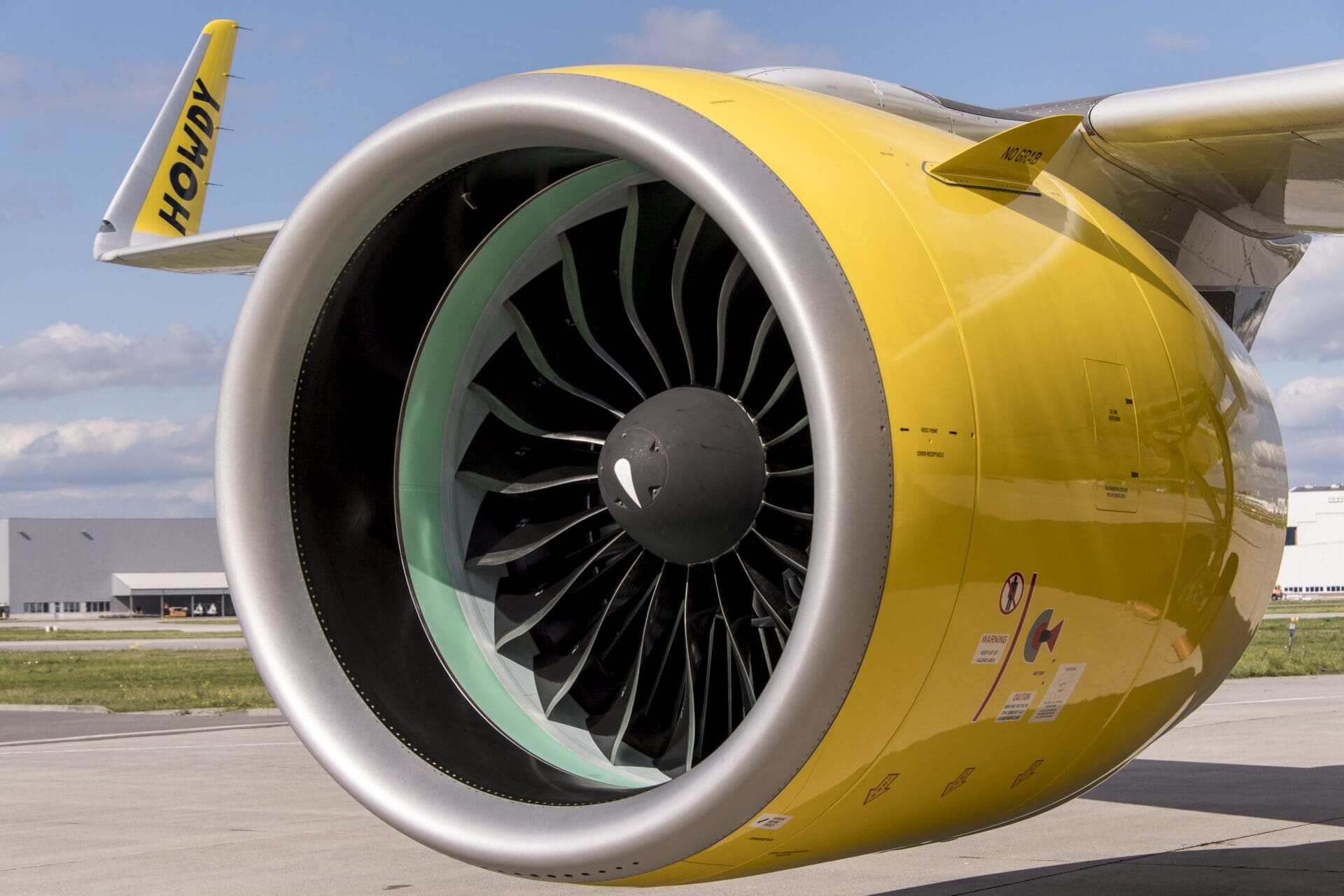

The Federal Aviation Administration (FAA) has issued a new airworthiness directive (AD) for certain International Aero Engines, LLC (IAE), Pratt & Whitney (PW) 1100G-JM engines.
PW 1100G-JM is a high-bypass geared turbofan engine family; developed under IAE LLC, a consortium of Pratt & Whitney, the Japanese Aero Engines Corporation (JAEC) and MTU Aero Engines.
developed by Pratt & Whitney with participation from THEIR member companies, IAE LLC, MTU Aero Engines and JAEC.
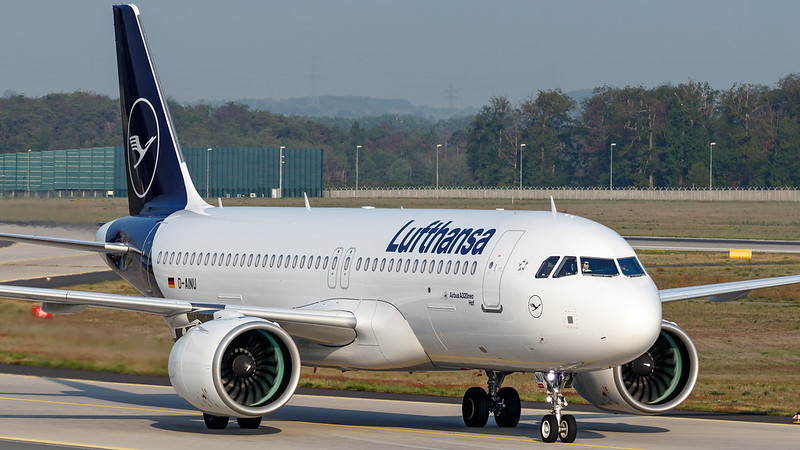
This engine powers the Airbus A320neo family.
Previous Problems
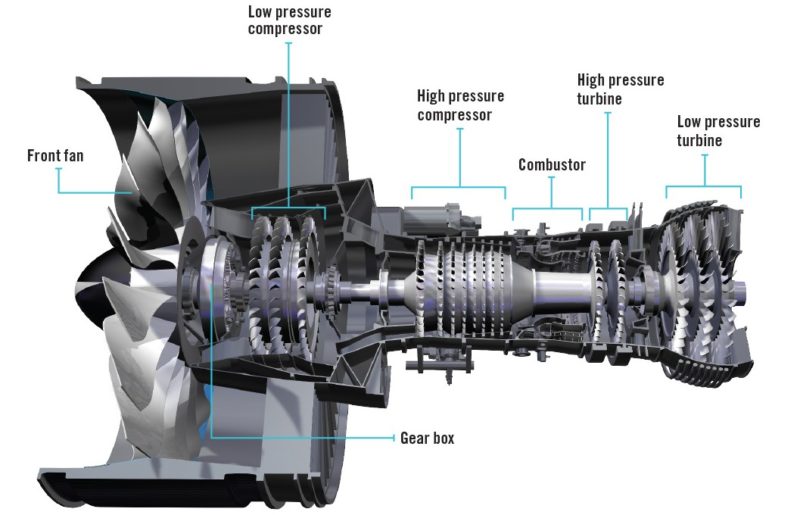
In the previous AD, the FAA reported that since 2017 received 57 instances of fractures occurring on the low-pressure turbine (LPT) 3rd-stage blades. It appears that these failures were caused by impact damage, occurring when debris passed through the engine.
According to the FAA, the manufacturer has determined the need to replace any affected LPT 3rd-stage blades with LPT blades made of a different material; this being a material that is more resistant to impact damage.
Required Actions
This AD requires the replacement of the affected LPT 3rd-stage blades, due to the previous failure reports. The FAA states that the AD is effective as of May 21st.
If not addressed, it could result in: the uncontained release of the LPT 3rd-stage blades, a failure of one or both engines and a loss of thrust control; consequentially this could lead to the loss of the aircraft.
The required actions must be done at the next engine shop visit, after the effective date of the AD. Any LPT 3rd-stage blades with P/N 5387343, 5387493, 5387473 or 5387503 must be removed from service and replaced with a part eligible for installation.
For the purpose of this AD, the FAA explains that an “engine shop visit” is the induction of an engine into the shop for maintenance involving the separation of pairs of major mating engine flanges.
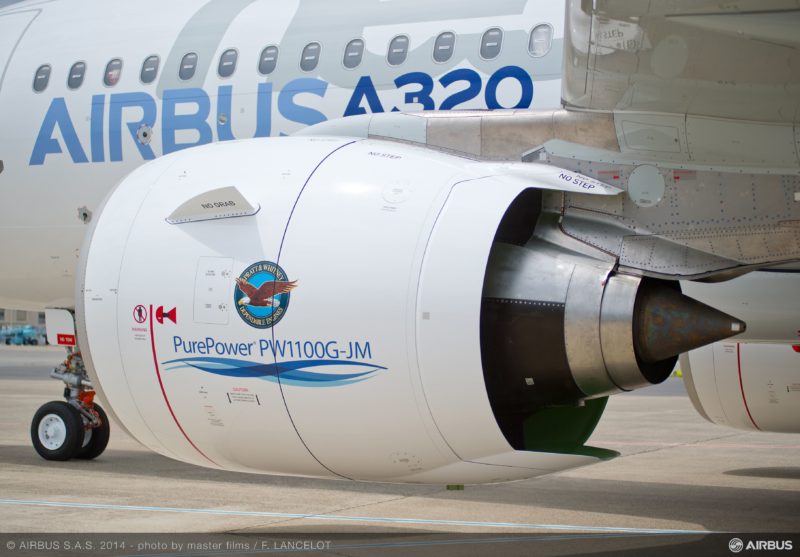
For the replacement of a set of LPT 3rd-stage blades, the FAA estimates a part cost of $750,000 per blade set per engine.
This AD concerns the following turbofan engines: PW1133G-JM, PW1133GA-JM, PW1130G-JM, PW1129G-JM, PW1127G-JM, PW1127GA-JM, PW1127G1-JM, PW1124G-JM, PW1124G1-JM and PW1122G-JM.
Feature Image: Airbus






It is my understanding that the PW1100 series was developed by Pratt and Whitney, and not a consortium. Am I wrong?
Oh gosh, the FAA is cr*pping on Airbus again, probably on Boeing’s behalf! Unbelievable! Horrid stuff going on.
Hello! Our comments were “heard” – in the directive the word LPC was replaced with LPT. Good job!!! Just kidding … Good luck!
See the fourth page of the directive. It indicates the third stage of the low pressure compressor. Someone is wrong …
Yes, Aleksey. I believe its a mistake because the problem is on the LPT 3rd-stage blade. And checking this AD and the previous one (AD 2020-06-02), they never mention the LPC, they always say “This AD requires replacement of the affected LPT 3rd-stage blades”.
These are their problems. Catarina, Good Luck !!!
I read the directive. It’s not clear … Indeed, the turbine, but the consequences are not obvious …
Hello Aleksey, on the point E – Unsafe Condition of the AD you can read “The unsafe condition, if not addressed, could result in uncontained release of the LPT 3rd-stage blades, failure of one or more engines, loss
of thrust control, and loss of the airplane”.
I support John. The blades of the third stage of the low-pressure turbine are the way out of the engine … How their failure can damage the engine, if only the surrounding atmosphere is further …
Hello Aleksey, even on the way out if an uncontained release of the LPT 3rd-stage blades occurs it can damage the engine, like the exhaust nozzle but also the aircraft.
This article is so poorly written it’s laughable. First off, the engine is made by Pratt and Whitney not by IAE (that would be the V2500). Second, the parts being replaced at the low pressure compressor, not the low pressure turbine. The author changes the part type throughout the article.
Hello John, the engine in question is developed under IAE, LLC, a consortium of Pratt & Whitney, JAEC and MTU Aero Engines. As the article mentions, the AD requires the replacement of affected LPT – Low-pressure turbine – 3rd-stage blades due to previous failures, you can check all the details on the FAA website.