


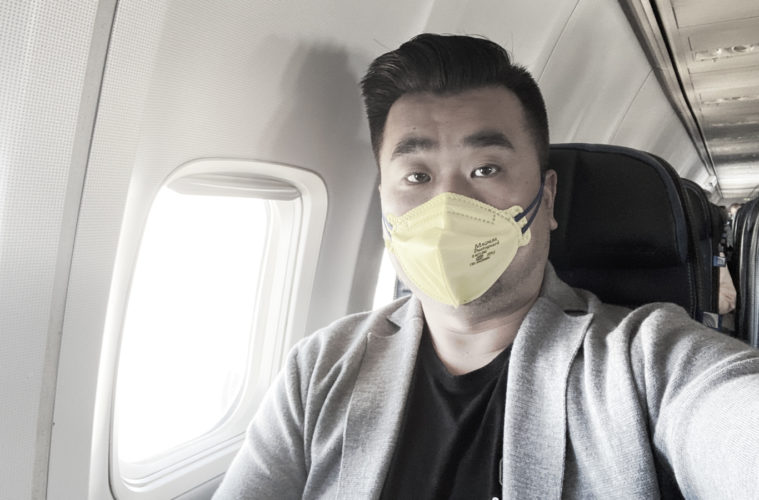

Major US airlines have now banned face masks with valves or vents, as CDC research has cast doubt over their effectiveness. From now on, passengers cannot board any American Airlines, Alaska Air, Delta, Frontier, JetBlue, Southwest, Spirit or United flight when wearing such masks – here’s why.
“A mask may not protect the wearer, but it may keep the wearer from spreading the virus to others” says the Centers for Disease Control and Prevention (CDC), which is exactly why masks with valves do not make the cut.
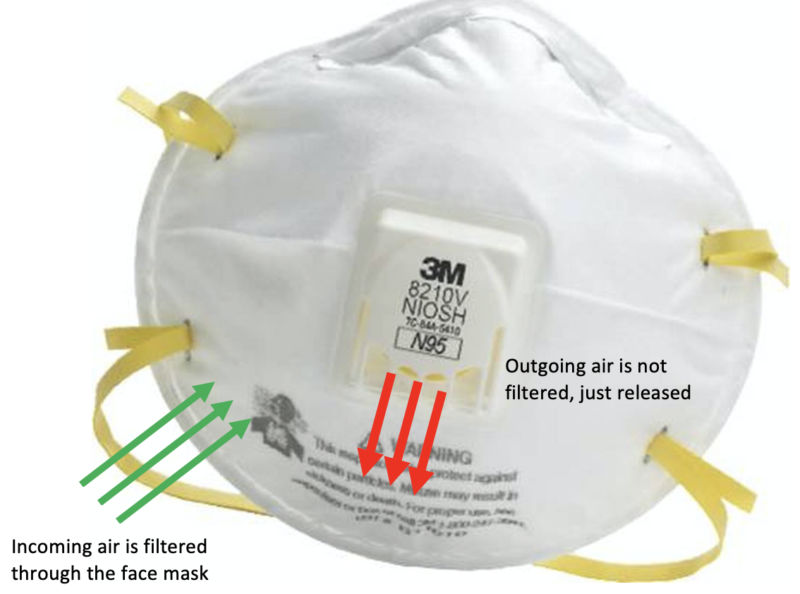
In the case of a standard surgical or N95 mask, air is filtered both in and out. Bear in mind that these masks are primarily designed to provide protection both ways, ensuring that contaminated outgoing air cannot escape the user’s mask.
Masks with valves are not designed for medical use; rather they are designed for situations where strong protection is needed for the wearer, but not necessarily those around them. Onboard an aircraft the air is filtered through hospital-grade HEPA filters, the wearing of masks helps ensure that infected water droplets do not enter the cabin.
“The purpose of masks is to keep respiratory droplets from reaching others to aid with source control. [Valves] can allow exhaled respiratory droplets to reach others and potentially spread the COVID-19 virus.”
CDC
Masks Are Already Mandatory
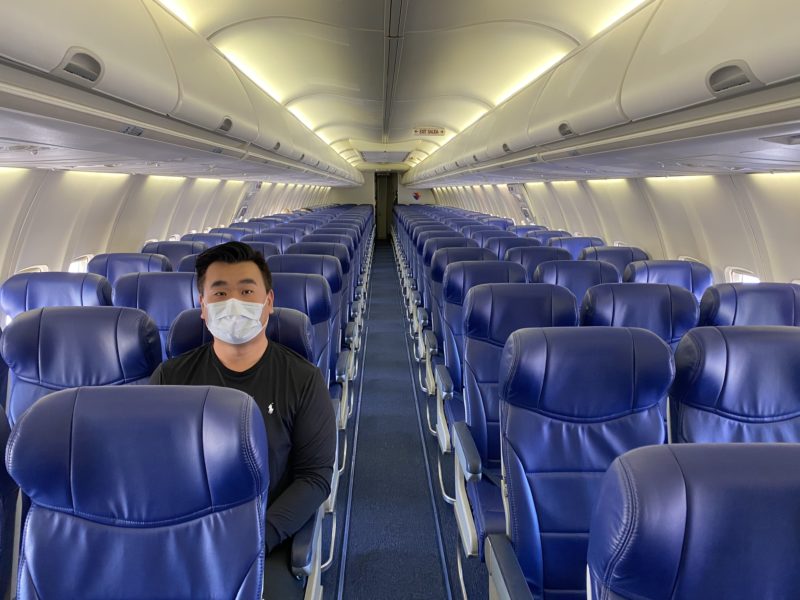
Face masks are now mandatory on US flights, so these tightened restrictions are unlikely to cause any major disruption. Airlines are accepting the vast majority of face coverings, including scarves and hand-sewn masks.
“Wearing a face covering is a responsibility we all share. An effective covering, worn properly, is one of the best ways we can control the spread of COVID-19 to protect our team members and customers.”
Alison Taylor, Chief Customer Officer, American Airlines
In a bid to restore confidence in their customers, carriers such as Alaska Airlines and United have adopted the strict “no mask, no travel, no exceptions” approach. The only exceptions are young children and for those who wearing a mask could be dangerous.
Do you think this ban is a necessary one? Let us know your views on mask wearing in the comments.





The problems that I see on a daily basis are those that wear their masks below their nose or even just on their chin.
I wear a mask with a valve to keep my glasses from fogging up. The valve allows air to pass through it instead of over my nose thus keeping the seal of the mask intact.
There seems to be a gross misunderstanding of what the valve on valved masks is there for: it should only activate on an over pressurisation, ie. if someone is breathing heavily, or panting, in order to keep the seal around the face. The valve should not activate under normal breathing. Furthermore, if everyone else is wearing an appropriate mask (hand sewn and other non-filtered cloth types are not), then by their own argument inhalation transmission is reduced regardless of whether a mask has a valve.
Having used valved masks in a variety of settings, I can assure you that the valve activates under normal breathing conditions. The aim of wearing masks onboard is to reduce the release of infected water droplets, not entirely to protect other users as it would be in a ground environment
I use valve masks on a daily basis for work, and the valve only actuates during overpressure scenarios. Your experiences of valved masks are clearly of ones that are not designed for high particulate environments. You’ve contradicted your own statement with regards to the release of infected water droplets: this is precisely why masks are being mandated in ground environments, too.
Except in a high-density scenario, like the enclosed environment of an aircraft, valved masks are banned. Clearly, the CDC and airlines do not deem their use appropriate…
Yet, the airlines, manufacturers, and CDC have taken great pains to remind us (those who want to fly) about the air filtration and recirculation systems on aircraft, which are vastly superior to other high-density, high-traffic environments: you even hint to it in the article. This u-turn on a particular type of mask just casts more doubt for the general public of the safety of such ventilation systems, and their overall effectiveness. This also casts further aspesions over the safety of meal services, where passengers will not be masked as they eat, and consuming food usually causes heavier breathing, and will potentially cause a higher particulate load it enter the cabin. Does this u-turn seem like a logical step forward? No.
yes, no sense…and the cost is x10
Are face-shields allowed on these planes as an alternative to masks? I find that unlike masks, shields do not continually steam up my glasses.
It is a grey area, I have seen only people wear both mask and shield but not just the shield.