


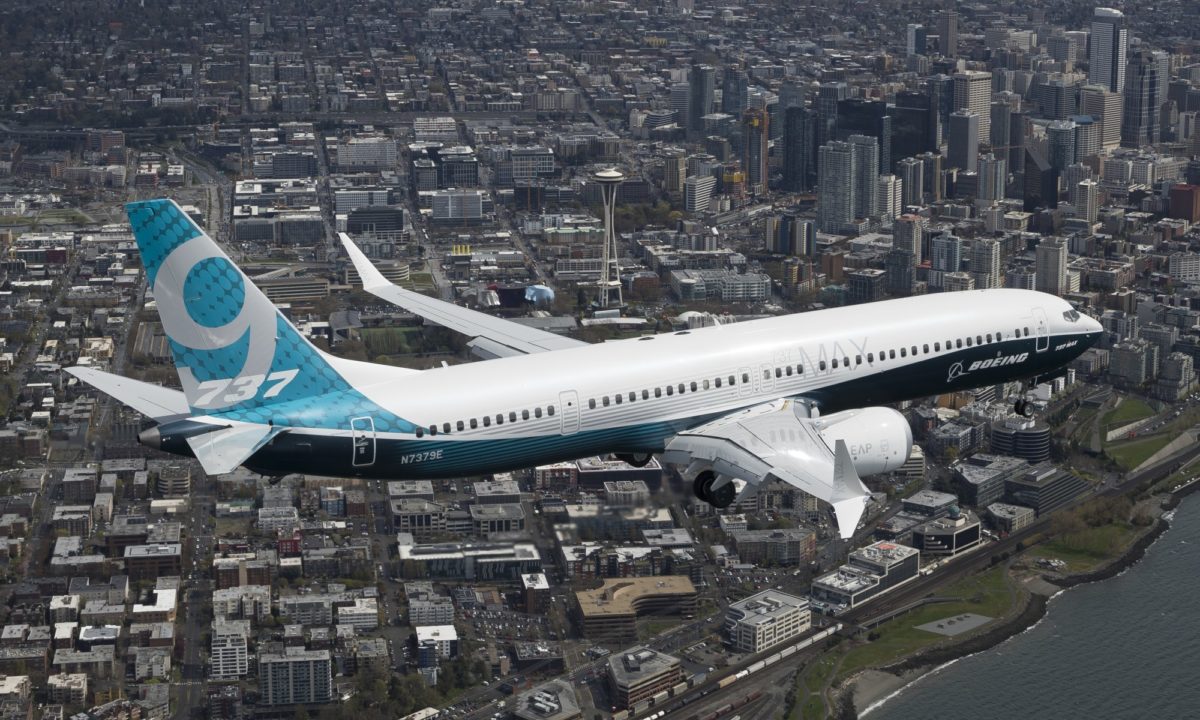

The 737 MAX has received plenty of attention from the media, regulators, criminal investigators and many other outlets, after two accidents left 346 people dead.
With this in mind, as Boeing scrambles to get the aircraft back in service, after months of being grounded, how exactly are they making the 737 MAX safe?
Stopping to Reflect
The Boeing 737 has been in service for more than 50 years, completing over 231 Million flights and carrying over 30 Billion passengers.
As of September 2019, 10,562 aircraft have been built across four variants:
- Original 737 (-100 and -200)
- Classic 737 (-300, -400 and -500)
- Next Generation 737 (-600, -700, -800 and -900)
- 737 MAX (7, 8, 9 and 10)
On the 29th of October 2018, Lion Air JT610 with 189 people on board crashed into the Java Sea, killing everyone. The accident was the first for the 737 MAX and the deadliest for the 737.
The aircraft, a 737 MAX 8 registered PK-LQP, was delivered to the airline new in August of that year and had only accumulated 800 flight hours.
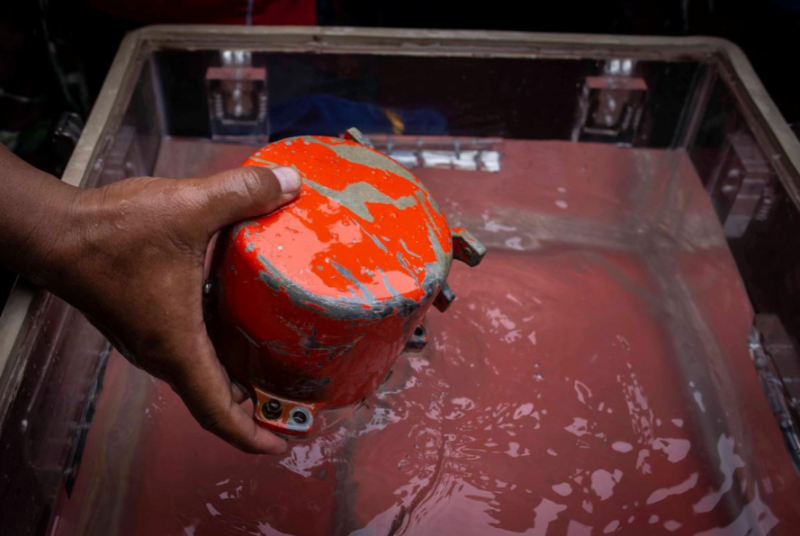
Early reports of the crash suggested a system malfunction may have been a contributing factor, as flight data showed anomalies with airspeed and angle of attack information.
Sudden pitch down movements unravelled the case of the Manoeuvring Characteristics Augmentation System (MCAS).
Boeing argued that MCAS was a system designed to save the aircraft from stalling; it was required for the 737 MAX due to its large CFM International LEAP engines, however any malfunction could be handled by the runaway stabiliser checklist.
For more on MCAS, see this article:
Fast forward to the 10th of March 2019 and the situation deepens for Boeing and the wider aviation industry.
Ethiopian Airlines flight ET302 was performing its climb out of Addis Ababa Bole International Airport when, shortly after takeoff, the aircraft crashed killing all 157 people on board.
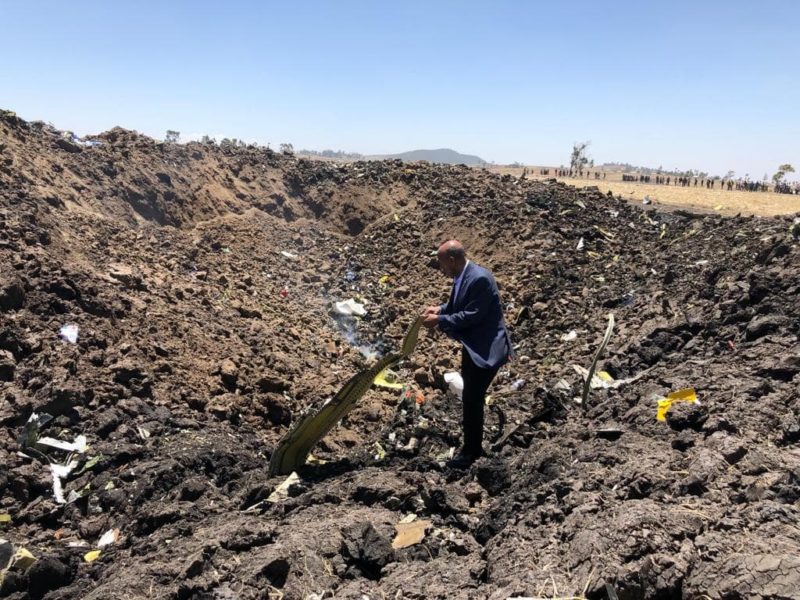
The wound was now wide open. Two 737 MAX aircraft had crashed within months of each other and no conclusions had been drawn.
Groundings began, with the rest of the world taking the lead before the United States Federal Aviation Administration (FAA) eventually caved three days later.
MCAS now had every eye cast upon it, with investigators now turning towards Boeing for answers about the rather unheard of system after new crash data had been received.
Built for Disaster
It is unclear as to why Boeing built MCAS the way they did, but we know for certain it was flawed.
We’ll start with a basic fact: the 737 MAX needed MCAS because of its inherent aerodynamic anomalies, caused by the high and forward mounted engines.
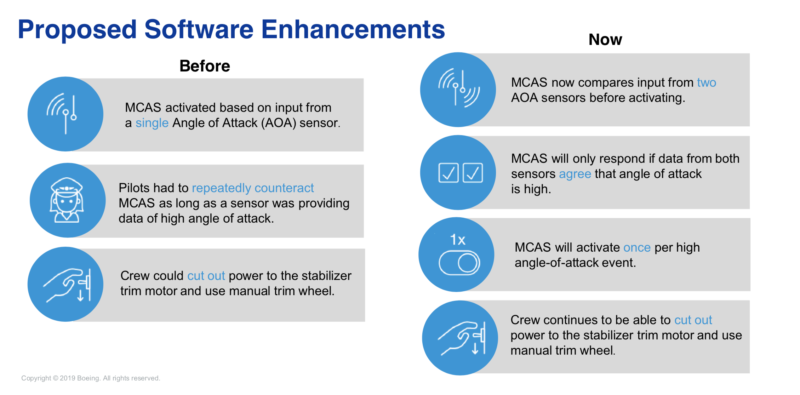
The intended design of the MCAS was that the system would receive data from a single Angle of Attack (AoA) sensor mounted on the nose . This meant a faulty sensor providing incorrect information could trigger MCAS.
In the case of Lion Air JT610 and Ethiopian Airlines ET302 pilots had to repeatedly counteract the MCAS, with no knowledge of how to override it. Even if the runaway stabiliser checklist was to be followed, no one knew about MCAS.
MCAS Software Enhancements
As a result of the findings relating to the MCAS and its believed contributions to the two crashes, Boeing has proposed a variety of enhancements to the system.
In fact, Boeing is already conducting test flights and analysing the revised system and is preparing to present their work to regulators to hopefully secure certification.
Unlike before, the revised system will take two data feeds from two seperate AoA sensors and will only activate if both sensors provide the same information.
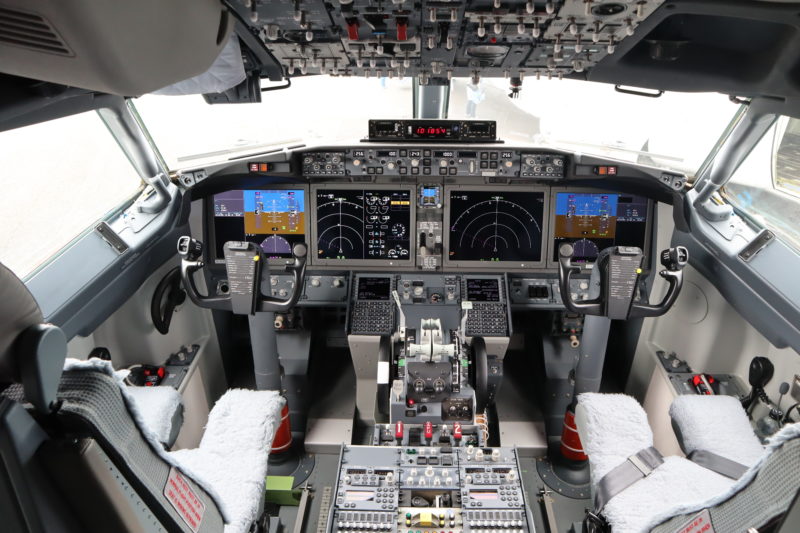
Additionally, rather than cycling multiple times per high angle of attack event the system will only activate once.
Pilots will still be able to disable the system using the runaway stabiliser checklist, however with an informed sense of what systems lie between their commands and the stabiliser movement.
Boeing has spent over 1,300 hours in the air in real aircraft testing, analysing the new software to ensure that it will be fit to fly in the eyes of safety and provide optimal operational performance.
1,000 flight hours have also been accumulated in simulators, with an additional 140 being with regulators working to clear the 737 MAX.
In total, Boeing has dedicated more than 100,000 hours to engineering and testing to determine a safe and efficient solution to the MCAS situation.
Pilot Training
A significant component to the MCAS story was the lack of information about the system in the first place.
As the events unfolded, and more and more studies were conducted on the design of the 737 MAX, it became clear that airlines and pilots had no idea about its existence.
This has lead to many angry pilots and criminal investigations, as it is seen as deliberately misleading airlines about the commonality Boeing had advertised between the 737 MAX and previous 737 iterations.
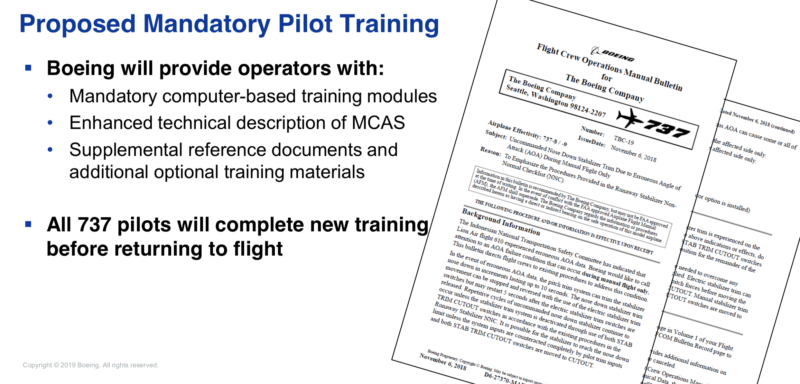
To solve this complication, Boeing will provide operators with: mandatory computer-based training modules, enhanced technical descriptions of MCAS, supplemental reference documents and optional training materials.
No 737 pilot within an airline operating the 737 MAX will be able to take to the skies unless these new training materials are completed and they must remain proficient.
What’s Next?
With all of the above ironed out, the next steps for Boeing are highly crucial to the safe return and future of the aircraft and the company’s reputation.
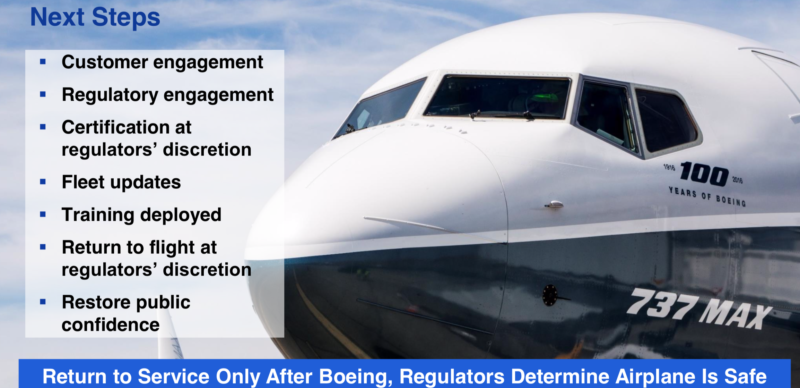
Customer engagement will come first, with discussions being held outlining the work that has been completed and what work will still have to be completed to return the aircraft to service.
Of course this will all work out if Boeing secures regulatory approval, which will either occur in a combined agreement or at their own discretion. Depending on which way it goes, Boeing has plans to return the aircraft in batches.
Before the aircraft can be cleared for takeoff, appropriate maintenance has to be conducted to any aircraft that has been parked on the ground in storage conditions.
This will include: the removal of tape, top-ups or fluid replacements, instrument checks, sensor checks and other maintenance related tasks.
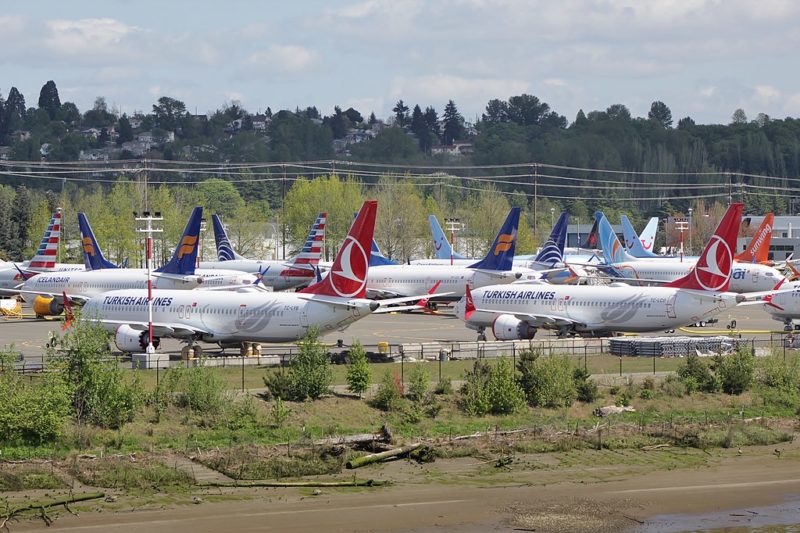
During a press conference that Sam Chui attended, Boeing stated that the MCAS software update will only take an hour to complete. Over 300 aircraft are stored across the world, with fresh production aircraft stored at the Puget Sound region, Moses Lake, Washington and San Antonio, Texas.
Fresh production aircraft that were sent to storage will be flown back to Seattle to be delivered to their respective customers, once ready.
While all this is happening, the deployment of training materials means that pilots can begin learning the information they should have been given in the first place.
Once the aircraft has cleared all the above steps, Boeing will have to battle one of the largest trust exercises in aviation history: convincing the world that the 737 MAX is a perfectly safe aircraft.
This will take years and even then, there will always be passengers refusing to associate with the aircraft. Rebuilding the reputation of the 737 MAX isn’t only crucial for Boeing’s future orders, it’s highly important for airlines who need to earn money from the type over a typical lifespan.
With the amount of media attention the 737 MAX has received, even the smallest mistake or incident, such as a go around, will lead to mass media attention.
Can it be done? Yes, but only to a certain extent. With the 737 MAX crisis breaking aviation records and setting some incredibly steep learning curves, Boeing knows there cannot be another 737 variant.
The next aircraft, when the time comes, will have to be a clean sheet design and Boeing knows this too.
Unfortunately the lessons learned from the 737 MAX have come at a cost and forever the lives of both JT610 and ET302 will be remembered.



their basically isn’t safe. their use MCAS only to prevent stall, but anyone lied. everything goes into an accident. 349 killed. its so many people, right? we didnt recommended to fly 737 MAX somewhere every pasenggers will fear and get kill.
I know Boeing will overcome this nightmare situation. 737 Max will become better than ever. I do trust Boeing and the entire staff. May God Bless Boeing and America as well. Thank Munzio
“We’ll start with a basic fact: the 737 MAX needed MCAS because of its inherent aerodynamic anomalies, caused by the high and forward mounted engines.”
That is NOT a fact, it’s a falsehood – the 737 MAX does not have any “inherent aerodynamic anomalies”! Witness the fact that the aircraft flies perfectly well with MCAS disarmed and you should have realized there’s a problem with your misconception about what MCAS was intended to do. Reading the other comments on this article reinforces just how damaging this pervasive misunderstanding is – people with a lasting and unnecessary fear of flying on this aircraft.
Very basically, the more powerful engines on the MAX can create a greater nose-up force on the 737 than the less powerful engines on the older 737 NG’s . MCAS was intended to make the MAX “feel” like the older NG model so that less training would be required. A pilot certified on the NG would need minimal new training to fly the MAX. That’s it. There is no fundamental aerodynamic problem with the 737 MAX, period.
They fatally botched the software on an otherwise perfectly good aircraft, and when you understand that actual fact you’ll better understand just how tragic the Lion Air and Ethiopian crashes truly are.
Jon,
Simply because, in certain parts of the flight envelope, the aircraft flies without MCAS or requiring MCAS is not a glowing testament to either its safety or by any means a denial of the fact there are aerodynamic anomalies in the design.
In certain circumstances (that do occur in normal flight for this aircraft and missions it flies) it does indeed display aerodynamic abnormalities and instabilities well beyond just the additional power generated by said engines. There are many weight, balance, and flight envelope related situations that are much more nuanced than you make it out to be.
I think your claim that “there is no fundamental aerodynamic problem with the 737 MAX, period” is so blatantly false and misinformed that even Boeing would not attempt to make such a claim. Most certainly, the circumstances under which any 737 MAX ferry flights have been certified to operate further indicates this, as those conditions are not simply a restriction on power/thrust settings of the engines, but, rather, much more rigorous sets of requirements around flaps, speed, and altitudes at which to operate that keep the aircraft well out of the areas of the flight envelope where there instabilities present themselves.
These flights were planned by people with the most requisite knowledge of the aircraft, its issues, and with the most to gain (and lose) from a successful flight and one without any undue issues that would further risk more delays in recertification.
Our armchair analyses here are one thing, but the actual actions taken by Boeing, regulators, and airlines who need to fly these until a permanent fix is made tells us more than any speculation, news story, or theoretical analysis could: it’s about a LOT more than just feel or power, man.
Hi Aaron, thank you for this insightful article.
In my opinion, this fix will never be accepted by the FAA or any other regulatory agencies. With this new version of MCAS, if AOA sensors disagree, then the MCAS disconnects, and you’re left with an unstable plane once again! What’s the use of the MCAS then? If the plane is unstable without the MCAS, how can FAA accept the fact that under certain circumstances, the MCAS simply disconnects? It makes no sense to me…
The very fact there must be software to “modify” the appropriate/required flight envelope/handling characteristics is a problem.
Poor aerodynamics and design because Boeing would rather keep throwing fuselage plugs on a design that was never meant for anything near the missions it is flying is finally catching up with them.
What I suspect is that Aaron (and any other aviation industry author) is drinking some form of Boeing Kool-Aid to suggest this is safe or wise for a commercial passenger aircraft (it’s one thing that the F-117 barely was airworthy absent complicated fly-by-wire systems, it’s a whole different one for a passenger aircraft flying commercial flights to be so).
I’m not saying that Aaron (or anyone else) is necessarily directly on Boeing payroll (I am sure some are) but we’ve seen what happens when we allow Boeing to control the dialogue or provide the “facts”/”story” about the airworthiness of their aircraft (see: entire certification process for the MAX ;)), and this article basically parrots the Boeing company line. I don’t find much value in it, and I, frankly, am still waiting for a well-articulated piece that makes a compelling finding that the 737 MAX can actually be made safe that isn’t just parroting Boeing talking points, which IMO cannot and should not be trusted.
Aaron, that’s a well-written article. There was no way to make the landing gear taller because there wasn’t enough space to accommodate it in the retracted position. An all-new design would have made that possible; instead they modified a 50-year-old product. It’s sad that a basic aerodynamic design flaw was “fixed” by adding a software program to overcome the challenges. The solution to the software malfunctioning was to disconnect it, thus leaving the airplane with the same original aerodynamic flaw, meaning there was no fix.
To regain the trust from the traveling public, Boeing execs can put themselves and all their immediate family members on several of the Maxes all at one time on a few proving flights. If they’re not willing to do that, it would show they’re really not confident in the design.
Hey Boeing I will believe these planes are safe if the whole Board of Boeing and the CEO and top management associates fly around the world on the 737 MAX when they go back into service. Don’t forget to bring your children onboard.
Even that just strikes me as a publicity stunt, as the flights can be done in such a way to avoid times, airports, elevations, weight/balance scenarios that steer well clear of the situations that put the aircraft in a posture/portion of the flight envelope that is involved with this instability/stall phenomenon.
Rearrange the deck chairs on the Titanic as much as you want, IMO, this thing cannot be made truly safe, although they will surely claim it as such and purchase enough media coverage to have the mantra repeated in popular channels enough that people will accept it as such – but neither that nor some software tweaks or alerting/EICAS tweaks can change the reality.
Boeing, MUST redesign the wings, so it can elevate the plane in order to accommodate the larger engines.Higher landing gear will solve the problem.
Sam,
Why are you assuming the 737 Max is the same as the older generation bearing the same prefix name?(737) there are lawsuits claiming the max is an entirely different plane. Remember FAA anď Boeing are party to the lawsuit. Please stop treating them with kid’s glove. You are tip-toeing on egg shells and it pains me to see you behave like that. I love your youtube videos.
Regards,
Andrew
The 737 MAX is still a 737 variant despite the claims of it being an entirely different aircraft. The basic design is still the same and the certification occurred under the 737 Family. The unknown addition of MCAS as a result of the poor aerodynamics is what’s caused the thoughts that it is not a 737.
Software cannot and will not fix hardware design flaws.
I can see your point but I am not 100% agree.
Indeed, all passengers plane should be aerodynamically stable.
Based on what I read, EASA will require triple redundant system for MCAS design if 737Max cannot show pitch stability with MCAS off.
As everyone know that 737 only have 2 AOA sensor and MCAS relies on those two inputs.
I personally have no doubt 737 will be recertified. However, the questions is “Do we need additional redundancy for MCAS to keep 737-Max safe?”