




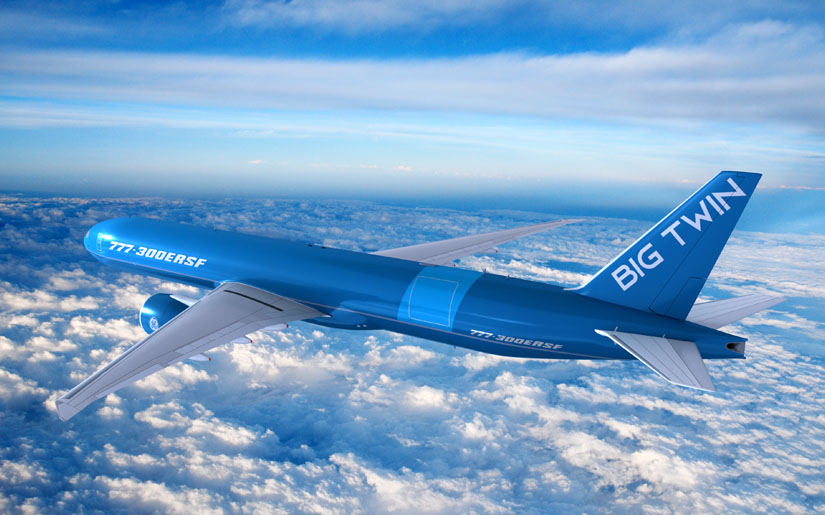

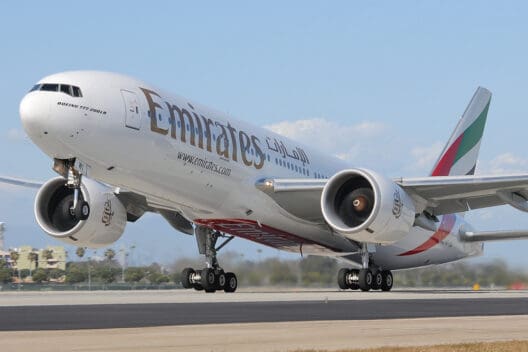
GE Capital Aviation Services (GECAS) has delivered a Boeing 777-300/ER to Israel Aerospace Industries (IAI) for freighter conversion, to become the prototype B777-300ERSF. The aircraft to be converted is owned by GE, and was previously leased to Emirates, registered A6-EBB.
The “Big Twin” B777-300/ERSF
The converted freighter, dubbed the “Big Twin,” is a collaboration between Israel Aerospace Industries (IAI) and GE Capital Aviation Services (GECAS). The design will make use of the existing B777-300ER passenger airframe, which is now the most popular widebody aircraft variant in history.
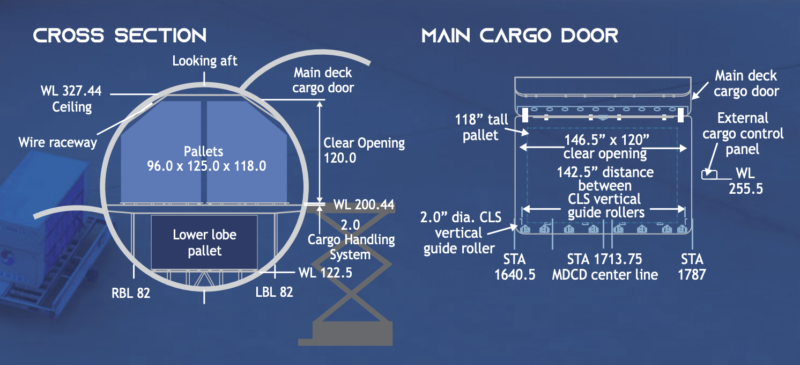
The “Big Twin” will have 25% more cargo capacity than the standard B777 freighter, which is based on the -200LR series. Furthermore, the aircraft will burn 21% less fuel per tonne than a B747-400 freighter.
Despite having a larger airframe and larger capacity, the “Big Twin” is expected to maintain 90% commonality with it’s standard 777 Freighter counterpart; of which there are currently 170 in operation.
Aircraft Performance
The “Big Twin” will retain the existing GE90 engines that are seen on the B777 Freighter. These engines will offer a fuel efficiency that will rival those of the ageing B747-400 Freighters currently in service around the world.
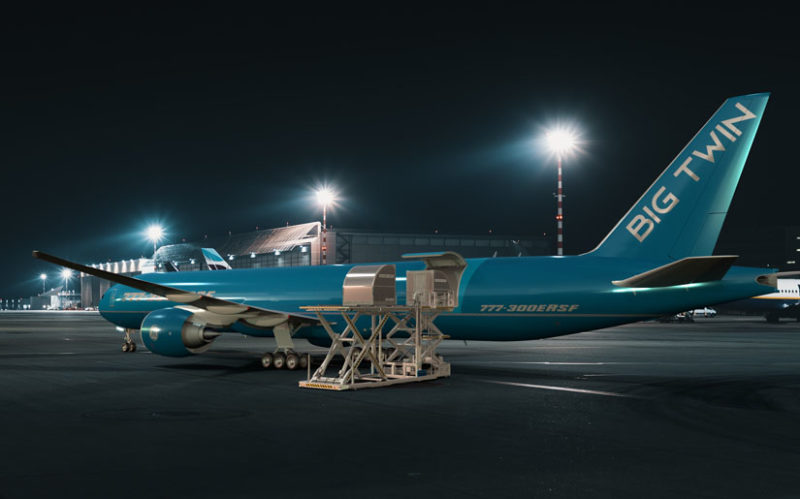
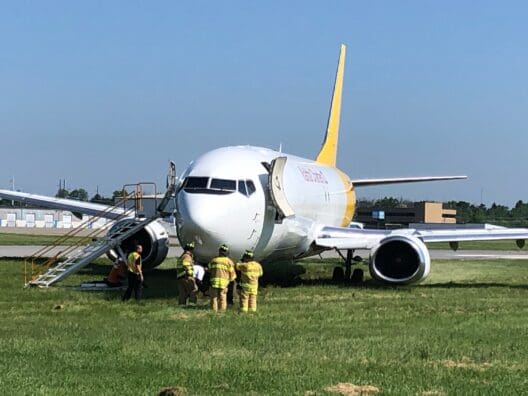
As part of the conversion process, all but two of the passenger-use exit doors will be deactivated and the windows will be blocked out. In addition, customers will be able to keep an optional row of Economy Class seats for passenger transport.
| Range | 4650 Nautical Miles |
| Maximum Takeoff Weight | 775,000 lb (351,534 kg) |
| Fuel Capacity | 47,890 Gallons (181,283 Litres) |
| Total Cargo Volume | 28,936 ft3 (819 m3) |
| Wingspan | 212.5 feet (64.80 meters) |
| Length | 239.75 feet (73.08 meters) |
Potential Customers
Set to enter into service in 2022, the “Big Twin” is expected to attract strong interest from cargo airlines looking to retire their ageing B747-400 Freighters. GECAS, in addition to being the program co-funder, will also be the launch customer.
GECAS has placed 15 firm orders and has 15 additional options for the aircraft, which will be leased to cargo operators and operate freight routes in times of disaster when extra cargo capacity is needed.
“The arrival of the prototype aircraft in Tel Aviv is an exciting milestone for the Big Twin freighter program. This aircraft sets out to meet requirements of the air cargo industry for the next 20 years.”
Richard Greener, SVP and Manager, GECAS Cargo






Is this become the first 777 Combi?
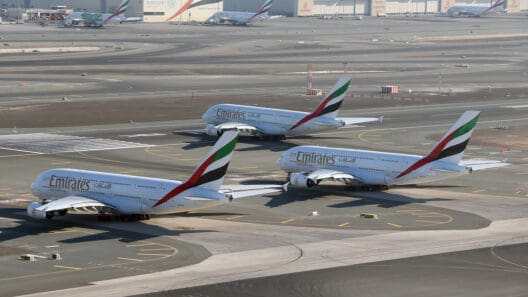
That COULD put the ‘nail in the coffin’ for the A380 freighter conversions that Lufthansa Tecknik are working on for airlines that still own A380’s and want to offload them to do different work for another operator! A good way to keep these young planes working but in a different capacity! I feel it is possible to use them on the 2 layer system or indeed some new design inside??
Whether the market for big freighters is viable for both B777 and A380 i am not sure but i continually read of this massive expansion in this area of aviation as its quicker than boat and as the world is so much ‘buy on line’ now,maybe the market place for freight is on for upwards curve thats only just started? The curve over time is huge and steep ! cheaper?? Well all model stockists use boat they tell me to keep prices for diecast models down? Whether this is the same for other industries ,i have no idea but it takes a long time to get anywhere using boats! I feel for small packages its best but for large quantities maybe its still too expensive to use for business that are not global magnets etc.
Will for a few years there will be more freighters in the sky than passenger planes as of Covid -19??
A first then…….
A220 apparently has some of the widest economy seats in the sky!! Can’t wait to try this plane out!
Regards.
Thank you for the report glad to you flying
I love what air Holywood are doing to save parts of some of these amazing birds. Lats see more PAX-CAGO conversions in the future and delete those graveyards once and for all.
My understanding is that airplane windows are heavier than aluminum or fuselage composite material. To save weight and fuel over the life of the aircraft, do they simply block-out the windows or do they actually replace the plexiglass with the material of the fuselage?
“The “Big Twin” will have 25% more cargo capacity than the standard B777 freighter, which is based on the -200LR series. Furthermore, the aircraft will burn 21% less fuel per tonne than a B747-400 freighter.”
“The “Big Twin” will retain the existing GE90 engines that are seen on the B777 Freighter. These engines will offer a fuel efficiency that will rival those of the ageing B747-400 Freighters currently in service around the world.”
Seems like the “Big Twin” efficiency MORE than rivals the B747-400, which has two additional older tech engines.