



This post was brought to you by Simple Flying. Written By Tom Boon, Luke Bodell, and Gaurav Joshi.
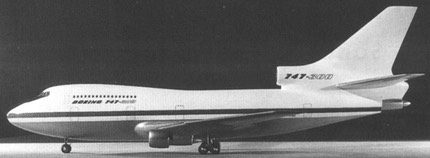
Many people consider the iconic, four-engine Boeing 747 to be the ‘Queen of the Skies.’ Boeing officially closed the book on the program after delivering its last-ever 747 in January 2023. However, there was once a time when the American manufacturer was also working on a shortened variant with three engines.
Although the project was scrapped quite early on in its development, it makes for an interesting story. Let’s check out the story behind the failed Boeing 747 trijet below.
The Boeing 747
The Boeing 747 needs no introduction. It is one of the company’s most successful aircraft, serving the skies for over 50 years and counting. Since then, Boeing has released several different iterations of the aircraft. The planemaker constructed and delivered 1,571 jumbo jets, with Atlas Air taking delivery of the final 747 ever built in January 2023.
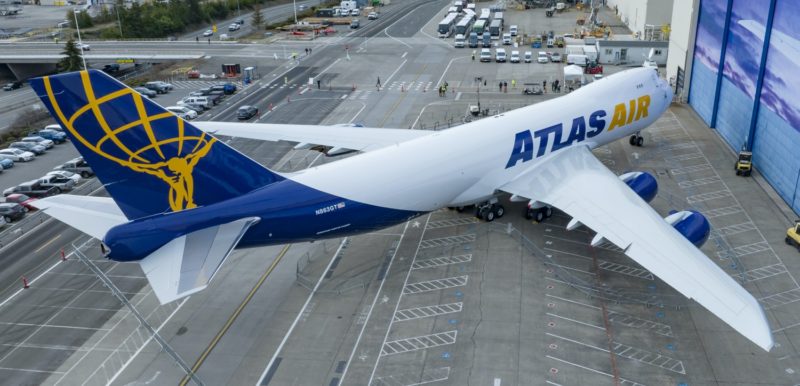
The latest model of the type is the 747-8, and its cargo equivalent is the 747-8F. In a three-class configuration, Korean Air’s examples of the aircraft hold 368 passengers (314 economy, 48 business, six first). Lufthansa launched the aircraft commercially in June 2012, and its four-class configuration on the 747-8 seats 364 passengers (244 economy, 32 premium economy, 80 business, 8 first).
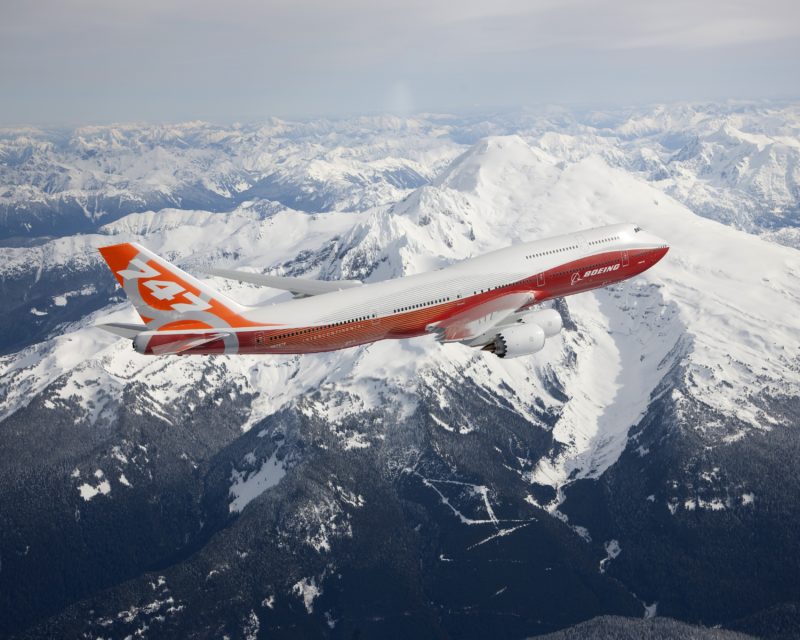
The Boeing 747-8 is also the world’s longest airliner, beating the Airbus A340-600 by just five feet (1.5m). Boeing is also currently working on two new Air Force One B747s for the US Government, originally scheduled for delivery in 2024, but now slated to be ready by 2026 at the earliest.
The proposed tri-jet variant
Nowadays, it is hard to imagine the 747 as anything other than a four-engine icon. However, in the 1960s and 1970s, Boeing was considering constructing a three-engine variant of the type with the usual one engine on either wing, with an additional engine mounted on the tail. This design would have been similar to the narrowbody Boeing 727, although obviously much larger.

The Boeing 747 Tri-jet would have been significantly shorter than the base 747. It was designed to compete with contemporary widebody tri-jet airliners, namely the Lockheed L1011 and the McDonnell Douglas DC-10. The aircraft would have had a greater passenger capacity, payload, and range than both of these prospective competitors.
Why did the project fail?
The proposal was ultimately unsuccessful due to two key factors. The first was the engineering required for this new aircraft. To make it structurally sound, the aircraft would have required a brand-new wing to be designed. This is because the contemporary wing design was made for two engines on either side. Given the costs and engineering difficulties involved, Boeing clearly felt a trijet was unfeasible and the Boeing 767 program – the company’s first twinjet widebody – would go on to prove a success.
Pilot training was the second factor in the project’s failure. Boeing was aiming to create a product that was almost identical to its regular 747 product as far as pilots could tell. Wanting to require minimal training for the conversion to the three-engine variant, Boeing was aiming to maintain the existing handling characteristics. This proved hard for the company to achieve with two main engines on the wings and a third mounted in the tail.
What became of the Boeing 747 tri-jet?
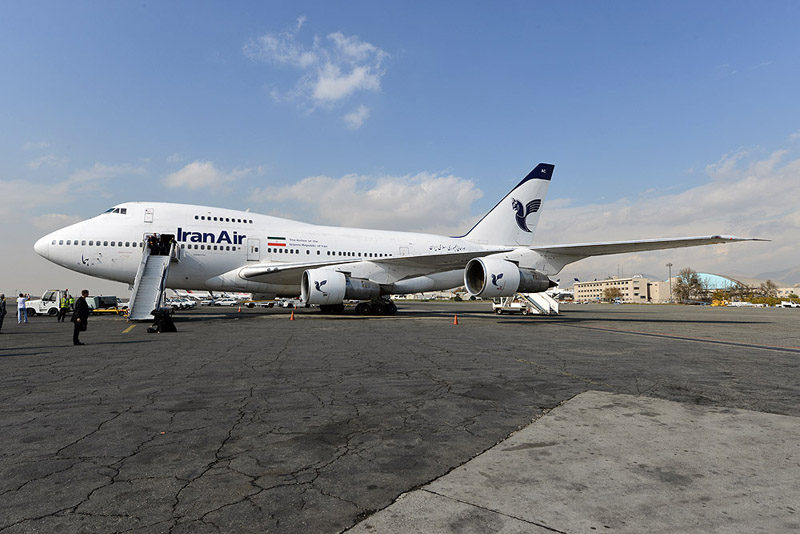
Boeing didn’t completely abandon the tri-jet variant of the 747. Instead of continuing development with three engines, the manufacturer created a shorter 747 with the conventional four engines. This was named the 747SP, with the suffix standing for ‘Special Performance.’ Entering service in 1976 with Pan Am, Boeing built a total of 45 747SP aircraft. According to Planespotters.net, four of these aircraft are still active today.
Arguably, the most interesting 747SP still in operation is known as SOFIA, which stands for ‘Stratospheric Observatory For Infrared Astronomy.’ With a huge door on the back of the aircraft that opens during flight, this aircraft houses a flying telescope. This aircraft, built in 1977 and currently registered as N747NA, was previously in operation with Pan Am and United Airlines before NASA acquired it in 1997. It bears the name ‘Clipper Lindbergh.’
A more successful second-generation tri-jet
Boeing’s tri-jet variant of the 747 ultimately proved unsuccessful in competing with the Lockheed L1011 and McDonnell Douglas DC10. However, towards the end of the 20th century, McDonnell Douglas launched a second-generation tri-jet airliner: the MD-11.
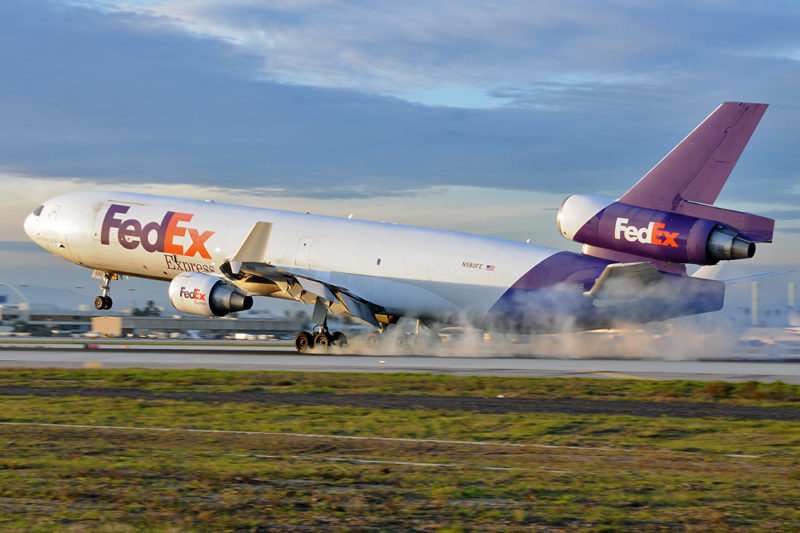
The MD-11 made its commercial debut with Finnair in December 1990 and was designed to compete with the Boeing 777 and Airbus A340. Its basic configuration was similar to that of the older DC-10; however, it benefited from updated engines. The MD-11 also boasted a longer fuselage and wider wings than its predecessor.
However, according to Planespotters.net, McDonnell Douglas only ended up building 200 of the type, with multiple orders left unfulfilled. The type now only sees service with cargo airlines.
How would a trijet fare today?
Modern long-haul aircraft with only two engines are now capable of flying long distances with a lower fuel burn, making them the preferred investment.
Boeing can perhaps be said to have dodged a bullet by not producing the tri-jet 747. Nonetheless, it would undoubtedly have made for a curious sight in the skies worldwide had it come to fruition.
What are your thoughts on this? Do you think Boeing made the right choice abandoning its 747 trijet proposal? Let us know in the comment section.
Source: Planespotters.net, Matheus Obst / Shutterstock (Feature Image)
This post was brought to you by Simple Flying. Written By Tom Boon, Luke Bodell, and Gaurav Joshi.









If you are ever at LAS be on the look out for the “mini” 747 that they have there. Easy to see. It’s on the Strip side of the airport. I believe one of the the casinos owns it.
Yes there was a very short bodied 747. Forget the details but I believe it was intended for long distance service..
Unless the trijet offered some major advantage over the SP (which I had the pleasure to fly on back in 1978), they definitely dodged a bullet, as the SP didn’t catch on and the development cost of the trijet version would have been far greater.
Cool story, never heard of it before. Those TWA and Pan Am photos are old photoshop jobs that have been floating around the internet, not historic renderings or otherwise. Maybe label them as such.
If you click on the ‘Twitter’-photos you can read the comments about those photos. They are very-interesting, and mention that these are ‘photoshopped’-images. 🙂